


Most years, the Consumer Electronics Show (CES) in Las Vegas feels like an arms race no one asked for. Slightly brighter screens. Slightly thinner laptops. Slightly faster processors that you’ll never notice outside of a benchmark chart.
But CES 2026 had glimmers of practical progress. Yes, AI was plastered on literally everything. But for me personally, it was the monitors that really stole the show. I’m talking 1,000Hz refresh rates that push competitive gaming into absurd territory, QD-OLED panels that you can finally use for real work, and 6K displays landing at prices that don’t feel like a dare.
There was still plenty of nonsense (it’s CES, after all), but for once, the useful stuff wasn’t hard to find. You just had to look past the robot dog doing backflips.
So if you’re curious about why I think 2026 might finally be the year to upgrade your monitor (and what else I’m genuinely excited about this year), read on for my short list of tech that impressed me at CES 2026.
Monitors Finally Had Their Moment (And I'm Not Complaining)
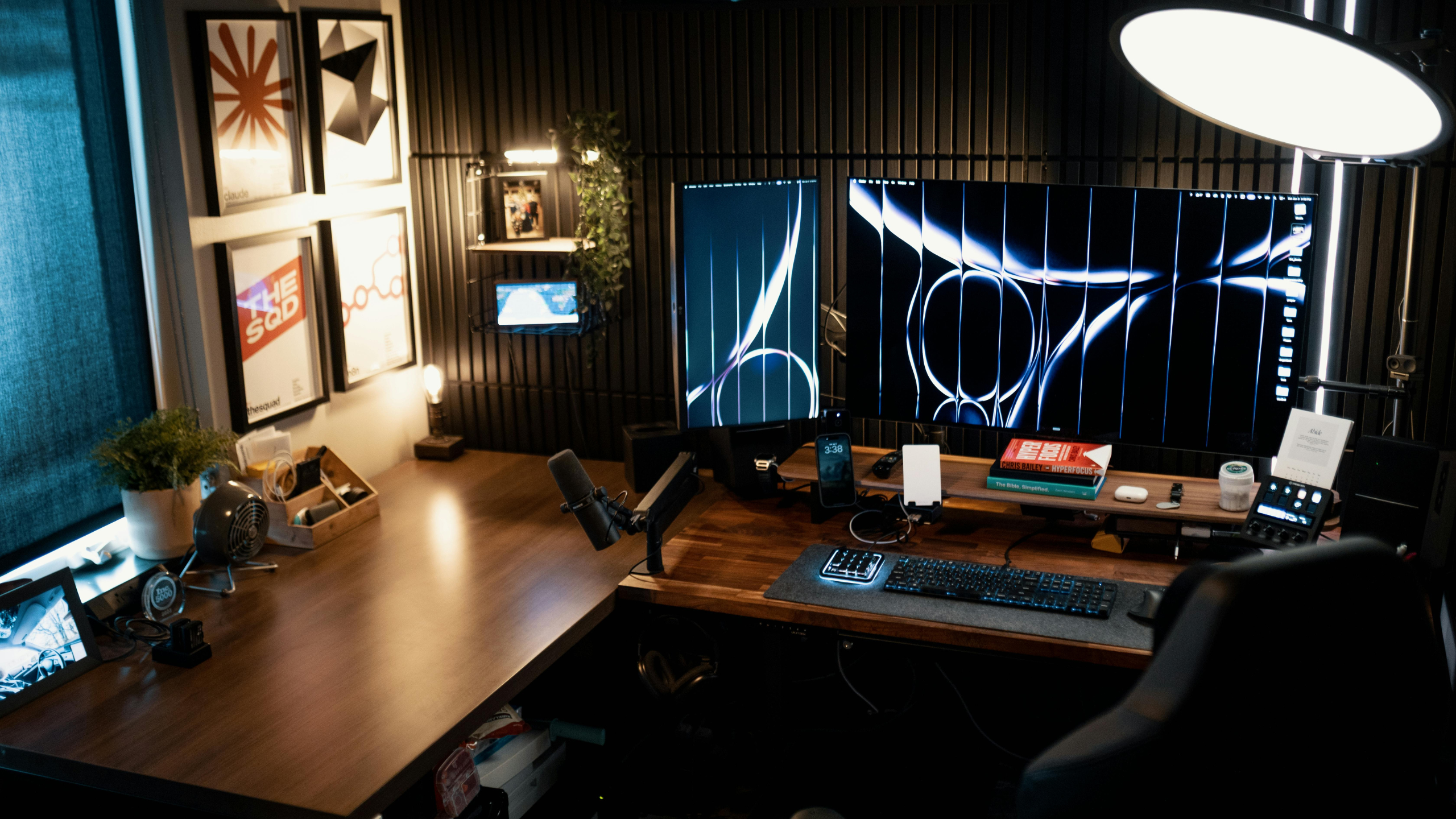
If you care about displays at all, CES 2026 was the year to watch. I've seen incremental monitor updates before, but this year felt different. The tech has finally caught up to what people have been asking for.
Samsung's 1,040Hz Monitor Is Ridiculous
Samsung announced the world's first monitor with a refresh rate over 1,000Hz: the Odyssey G6, which hits 1,040Hz.
Now, before you get too excited, there's a catch. It only reaches that refresh rate in HD resolution. That's not exactly what most people are gaming at in 2026. But it’s still proof of concept that shows where the industry is heading.
Samsung's 5th-Gen QD-OLED Finally Fixes the Text Problem
Samsung's previous QD-OLED panels were stunning for gaming and media, but they had a well-known issue with text clarity. The triangular subpixel arrangement caused color fringing around small text, which made it less ideal for productivity work.
The new 5th-gen QD-OLED panels switch to an RGB Stripe layout. That means the red, green, and blue subpixels are arranged in rows instead of triangles. I saw these panels in person at multiple booths (Asus, MSI, Gigabyte), and the difference is noticeable.
So if you've been holding off on an OLED monitor because of text clarity concerns, this generation changes the conversation.
LG Went Big (Literally)
LG took a completely different approach. Instead of chasing refresh rates, they focused on size and resolution.
The UltraGear EVO 52G930B is a 52-inch gaming monitor with a 21:9 aspect ratio. That's not a typo. It's three inches larger than the typical 49-inch super-ultrawide, but more importantly, it's taller. The 21:9 aspect ratio gives you about 56 percent more display area compared to a 32:9 super-ultrawide.
For simulation games, flight sims, or first-person titles where you want a vertical field of view, this is a massive upgrade. It's also genuinely useful for productivity if you have the desk space.
LG also announced the world's first 39-inch OLED gaming monitor with a 5,120 x 2,160 panel and 5K AI upscaling. If you want a single massive display that can replace a multi-monitor setup, these are the options to watch.
Dell Built a 52-Inch Command Center
Dell's Ultrasharp 52 Thunderbolt Hub Monitor is aimed at a completely different audience.
This is a 6K resolution display with a 120Hz refresh rate, but the real story is the connectivity. It has a Thunderbolt 4 hub with 140 watts of power delivery, two additional USB-C ports, USB-A ports, 2.5Gbps Ethernet, and a KVM switch that supports up to four PCs.
It's designed for people who juggle multiple devices and need everything connected through one display. If you're running a home studio, managing multiple workstations, or just hate cable clutter, this is the kind of product that makes sense. It's a bit expensive at $2,799, but for the right use case, it solves a lot of problems.
Acer's 6K Display Hits a Sweet Spot
Acer's ProDesigner PE320QX is a 31.5-inch 6K display aimed at creative professionals. The resolution is 6016×3384, which works out to about 220 pixels per inch. That's a noticeable jump from the roughly 140ppi you get on a 32-inch 4K display.
What makes this interesting is the price. At $1,499, it's positioned as a more accessible option for people who want high pixel density without spending $2,500+. It also has USB4 with 100 watts of power delivery, VESA DisplayHDR 600 certification, and a proximity sensor that dims the display when you step away.
It won't ship until Q2 2026, but it's one to keep an eye on if you're in the market for a high-resolution display for photo or video work.
Samsung's Micro RGB TVs Are the Real Deal
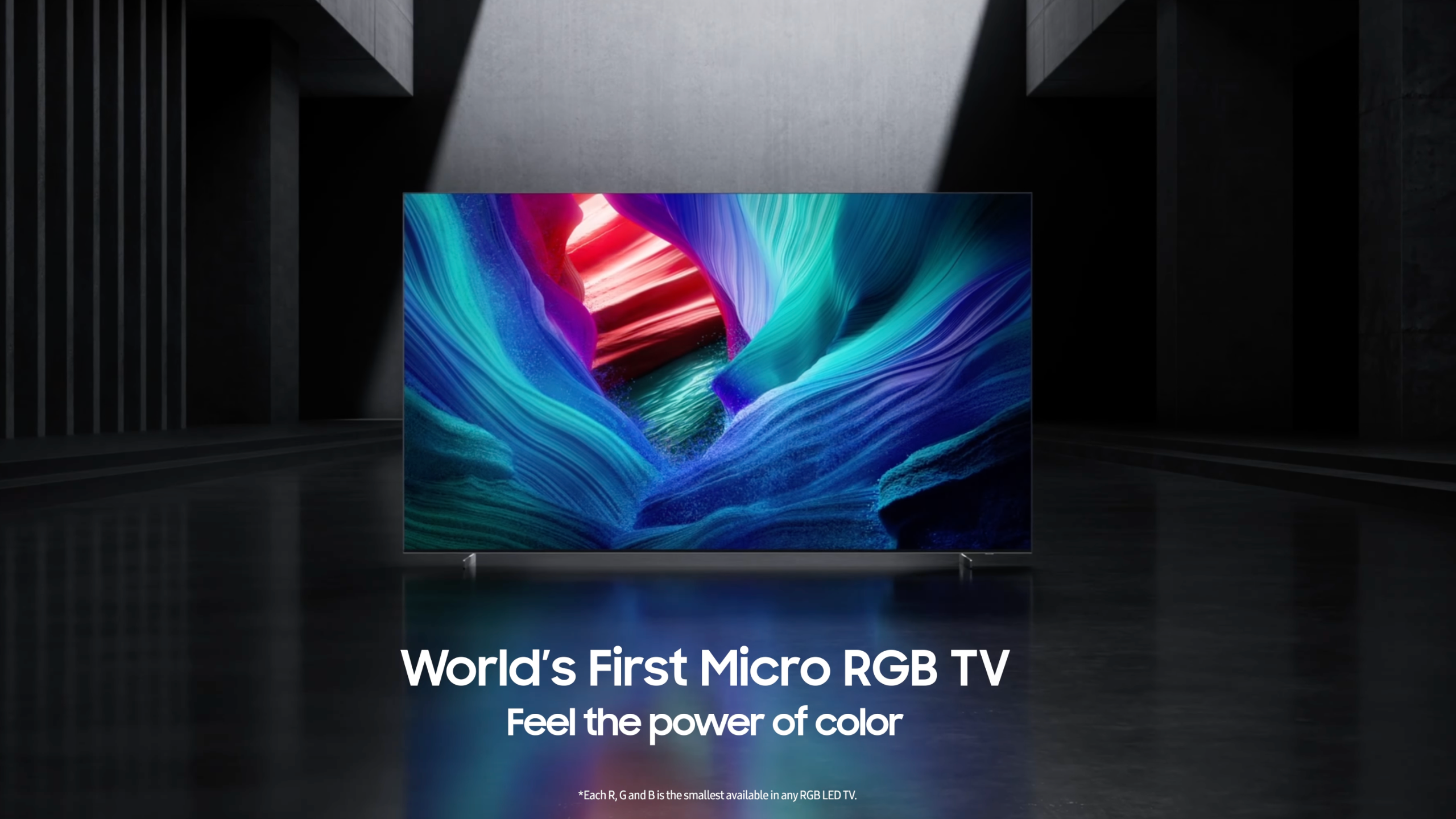
I've been skeptical of new TV tech for a while. Every year, there's a new acronym and a promise that this time, it's different.
Samsung's Micro RGB technology actually feels different.
Instead of using traditional LED backlights that emit white or blue light, Micro RGB uses individual red, green, and blue LEDs that are smaller than 100 micrometers. Each LED emits light independently, which gives you better color accuracy and more precise light control.
Samsung expanded the lineup for 2026 with sizes ranging from 55 inches all the way up to 130 inches. The 130-inch model was the showstopper at CES, but the more interesting story is that they're bringing this tech down to more reasonable sizes.
The new models include features like Micro RGB Precision Color 100, which achieves 100% of the BT.2020 wide color gamut (certified by VDE). They also added glare-free technology to minimize reflections, which is a bigger deal than it sounds if you've ever tried to watch TV in a bright room.
What makes Micro RGB so compelling is that it's brighter than OLED and potentially more affordable at larger sizes. So if you've been waiting for premium TV tech that doesn't require a second mortgage, this is the category to watch.
AI Was Everywhere (But Most of It Doesn't Matter… Yet)
AI dominated CES 2026. Every press release and product demo mentioned it. But honestly, most of it felt like feature bloat.
That said, a few AI implementations actually made sense.
NVIDIA announced the Rubin Architecture, which is their next-generation AI chip platform. Intel unveiled Panther Lake (Core Ultra Series 3), and Qualcomm showed off the Snapdragon X2 Plus. These are the chips that will power the next wave of AI-capable devices, and the performance improvements are real.
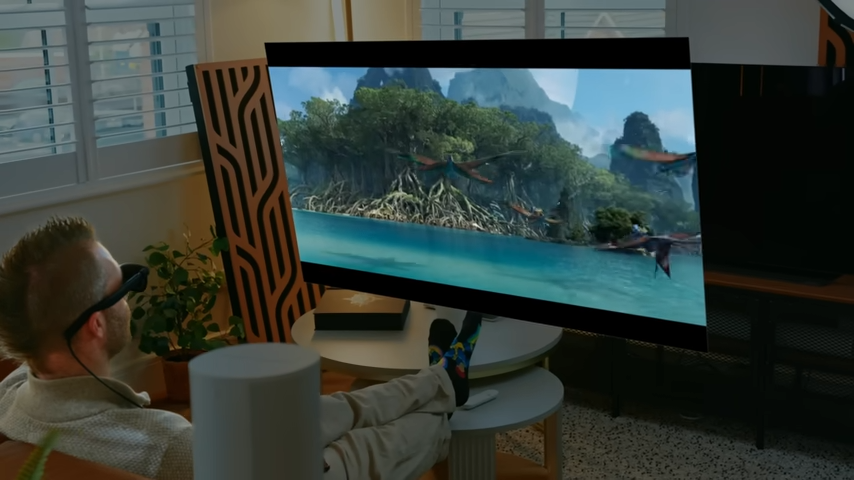
On the consumer side, smart glasses with generative AI voice interfaces were everywhere. The pitch is hands-free daily use with real-time AI assistance. I'm still not convinced most people want to wear smart glasses, but the tech is getting better.
LG's monitors include 5K AI upscaling and AI-powered burn-in prevention sensors. Those are practical features that solve real problems. Upscaling lower-resolution content to match a high-res display is useful. Preventing OLED burn-in extends the life of expensive panels. That's the kind of AI integration that makes sense.
The rest? AI pet collars, AI companions, AI toys… it all felt like solutions looking for problems.
Robotics Got More Practical
Robotics was a major theme at CES 2026, but the focus has shifted.
Instead of flashy humanoid robots, most of the announcements centered on practical applications, like robots for specific tasks that deliver measurable value in terms of quality, safety, and efficiency. Think exoskeletons for industrial work, robotic pool cleaners with solar power, and small mobile robots that follow pets and record video.
It's less exciting than a dancing robot, but it's more useful. And that's the direction the industry is heading.
Laptops and Phones Were... Fine
I'm not going to pretend the laptop and phone announcements were groundbreaking.
The Samsung Galaxy Z TriFold won Best of CES 2026. It's a phone that folds three times. That's impressive engineering, but I'm still not convinced foldable phones are for most people. They're expensive, fragile, and solve a problem that most users don't have.
Lenovo showed off a rollable gaming laptop concept. MSI announced the Prestige 13 AI+ as a powerful Windows 11 Pro laptop. And the Lenovo ThinkPad X1 Carbon Gen 14 Aura Edition was named Best Laptop.
All of these are solid products, but none of them are must-haves unless you're already in the market for an upgrade. If your current laptop works, there's no compelling reason to rush out and replace it.
My Final Takeaways from CES 2026
To sum up this article, here are my four key takeaways from CES 2026:
- Monitors had a genuinely great year. If you've been waiting to upgrade your display, 2026 is the year to do it with brands like Samsung, Dell, and LG.
- Samsung's Micro RGB TVs are worth watching if you're in the market for a premium TV. The tech is solid, the sizes are expanding, and the pricing is becoming more reasonable.
- AI is everywhere, but most of it is noise. Focus on the implementations that solve real problems (like AI-powered upscaling, smarter burn-in prevention, and more efficient next-gen chips that actually improve day-to-day performance).
- Robotics is getting more practical and less flashy. That's a good thing, because it means companies are finally prioritizing useful automation over stage-ready stunts.
Everything else? Wait and see. Most of the products announced at CES 2026 won't ship until later in the year, and some of them won't ship at all. The ones that matter will still be around in six months.
All in all, I’m cautiously optimistic. And that’s not something I say lightly after walking the CES floor.
