


Choosing a Garmin watch can be genuinely confusing. That might even be an understatement.
Garmin has one of the most extensive wearable lineups on the market. Budget models. Premium models. New releases. Older classics. Watches built for specific sports that look almost identical to others that are not. Some ranges overlap heavily, while others excel at one thing. On top of that, many series come in multiple sizes, finishes, and feature tiers.
Over the past couple of years, I have tested a wide range of Garmin watches. I also happen to live near the only Garmin store here in the UK, so I recently visited the Garmin Store at Southampton West Quay to physically handle every watch Garmin currently sells. Seeing them side by side really highlights how overwhelming this lineup has become.
The good news is that almost all Garmin watches run the same software. Once you learn one Garmin, you can use just about any of them. Same interface. Same buttons. Same general experience. That makes this guide much easier to simplify.
The goal here is not to list every spec. It is to help you narrow your options and choose the best Garmin watch for you, based on how you actually live, train, and use a watch day to day.
Why Choosing A Garmin Watch Is So Confusing
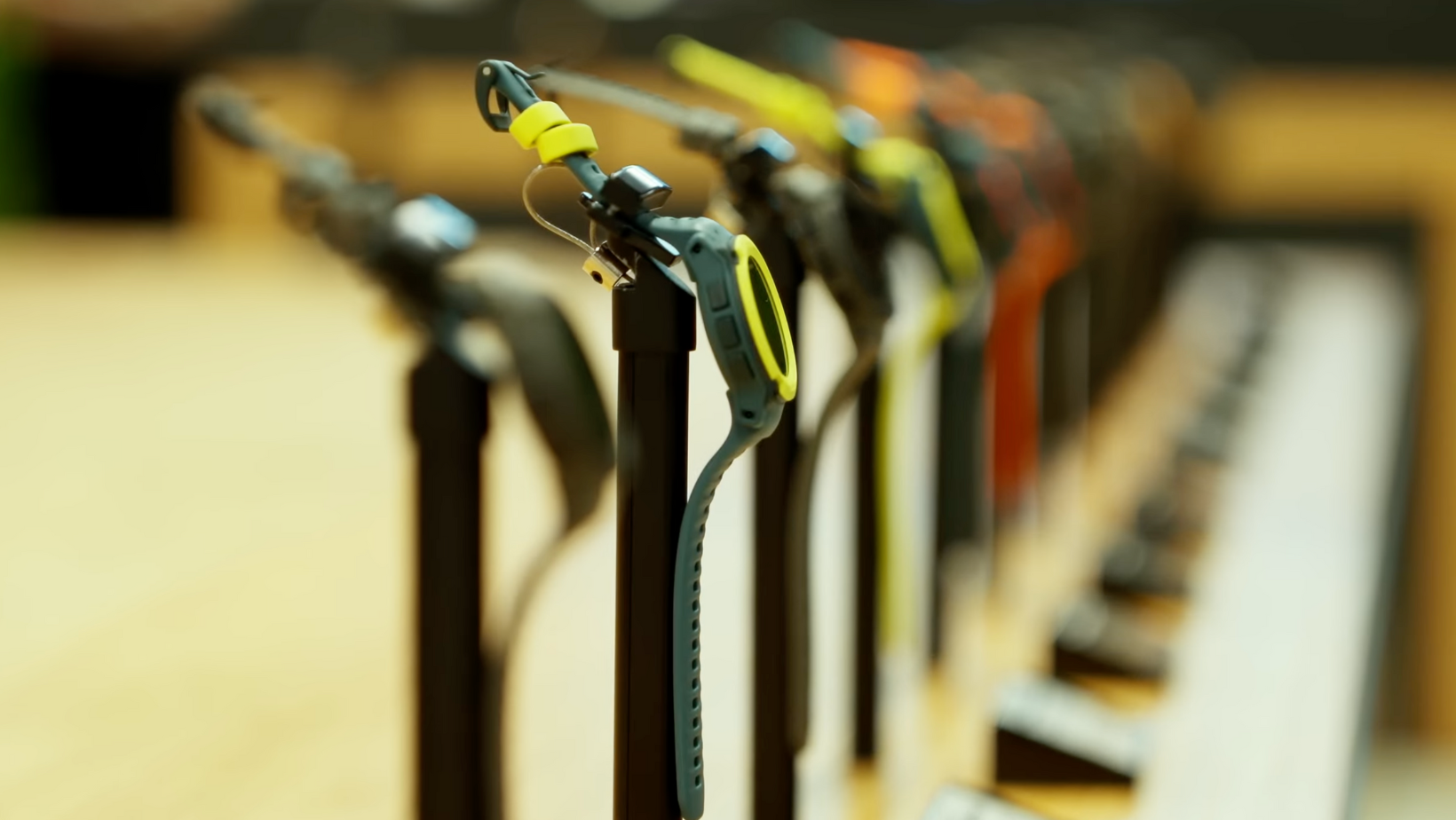
If you go to Garmin’s website, you are immediately hit with long product families like Instinct, Forerunner, Venu, Tactix, Enduro, Lily, Marq, Approach, Descent, Quatix, Vivoactive, Vivomove, Vivofit, Vivosmart, D2, Fenix, and more.
Many of those families then split into multiple sub-models. The Garmin Venu X1, for example, looks nothing like the Garmin Venu 4, even though they share the same family name. When you add different sizes, materials, solar options, and display types, it becomes very hard to know where to start.
The trick with Garmin is to stop thinking in terms of product names and start thinking in terms of use cases.
A Quick Note On Garmin Discounts In The UK (Vitality)
This guide is not sponsored, but there is a legitimate way for UK viewers to get up to £100 off Garmin devices through Vitality Health Insurance.
I have personally used Vitality for around eight years. Beyond private healthcare access, it includes discounts on Garmin watches, cinema tickets, food, Deliveroo Plus, gym memberships, Samsung products, and more.
Now, onto the watches.
Best Garmin Watch For Running, Swimming, And Cycling
Running, swimming, and cycling all fall into the same category for Garmin. If a watch handles one of these well, it usually handles all three.
The leading contenders are the Garmin Forerunner series, the Garmin Fenix 8, the Garmin Enduro 3, and the Garmin Venu X1, depending on your priorities.
Garmin Forerunner Series: From Beginner To Advanced Runners
The Garmin Forerunner lineup is Garmin’s core running range.
The Garmin Forerunner 55 and Garmin Forerunner 165 are excellent value if you want a straightforward running watch. They cover GPS, heart rate, training metrics, and basic fitness tracking. The Forerunner 165 Music adds onboard music storage so you can run without your phone.
The Garmin Forerunner 570 adds more advanced training features like training readiness, training status, multisport modes, and onboard music as standard.
For serious runners, the Garmin Forerunner 970 includes built-in maps, advanced GPS features, and a built-in flashlight. This is very much aimed at high-level training rather than casual running.
If you just want a reliable watch to run with, the Forerunner 55 or 165 are hard to beat. If you want deeper training data, the 570 or 970 make sense.
Garmin Venu X1: Big Screen, Short Battery
The Garmin Venu X1 is very different from most Garmin watches. It has the largest touchscreen Garmin offers and is impressively thin and lightweight.
The downside is battery life. In real-world use, you are looking at roughly one to two days. It also has fewer physical buttons, which matters more than people think when running. Buttons make it much harder to accidentally pause a workout, a common issue with touchscreen-only watches.
If a large touchscreen Garmin is what you want, the Venu X1 is an option. Just know the trade-offs.
Garmin Enduro 3: Extreme Battery Life
As the name suggests, the Garmin Enduro 3 is built around endurance. It uses a memory-in-pixel display with solar charging and delivers weeks of battery life on a single charge. With enough sunlight, Garmin claims it can approach unlimited battery life.
The trade-off is a less vibrant display and fewer lifestyle features compared to AMOLED-based watches. It also comes in limited sizes and colors.
If you hate charging and prioritize battery life above everything else, the Enduro 3 is a fantastic option.
Garmin Fenix 8: The Premium All-In-One Option
The Garmin Fenix 8 sits at the top of Garmin’s mainstream lineup.
It is more expensive, but it combines strong running features with excellent build quality, multiple sizes, a wide range of finishes, and deep sport support. The Fenix E Series offers slightly more affordable options, while the Fenix 8 Pro adds features like LTE for calls and texts without your phone and satellite communication for off-grid use.
If your budget allows and you want a single watch that does almost everything well, the Fenix 8 is hard to fault.
Best Garmin Watch For Women
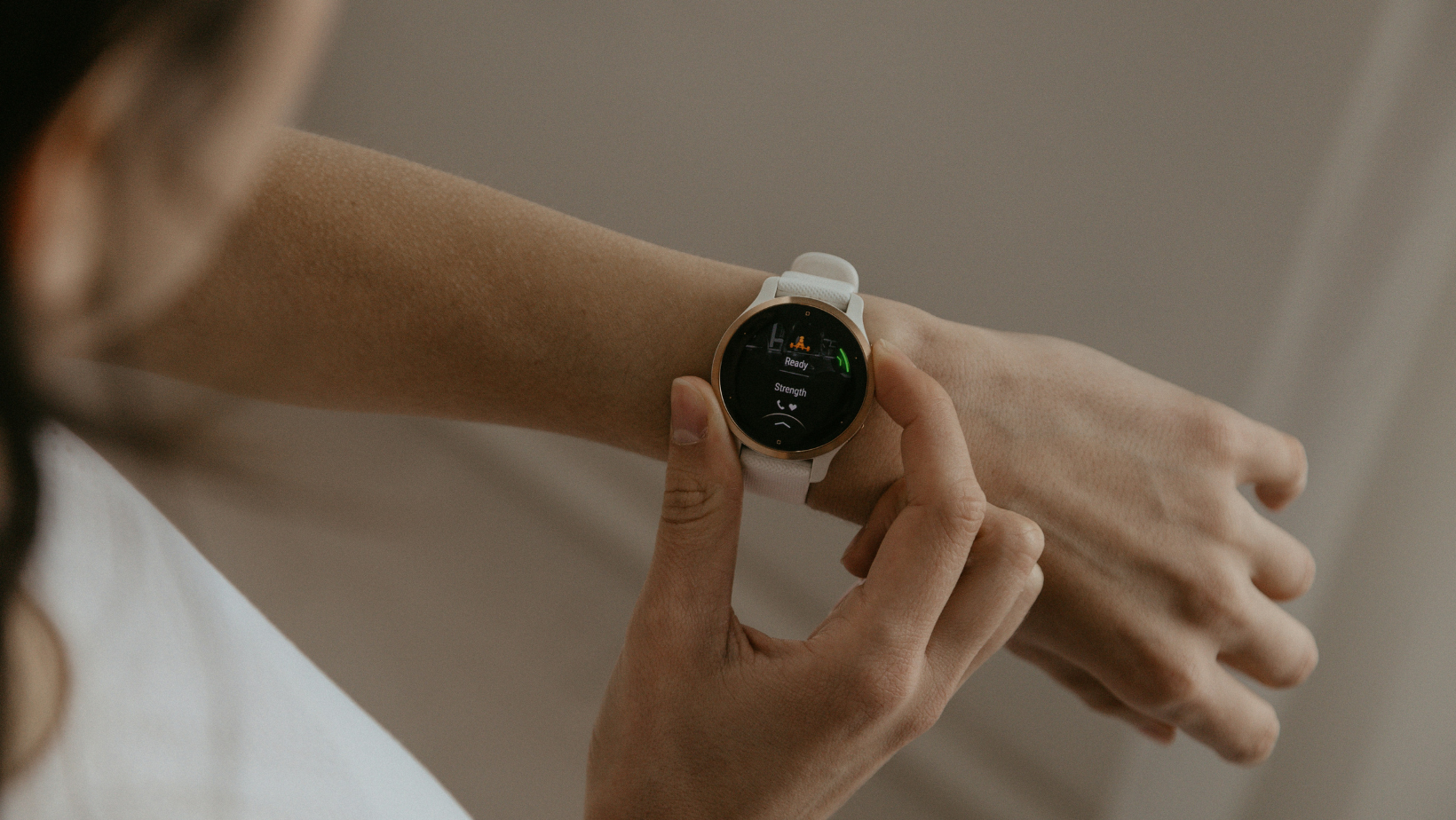
Women’s watch preferences vary a lot, as do men’s. Some want a smaller, more stylish watch. Others want full sports and training features.
For smaller and more lifestyle-focused options, the Garmin Vivomove, Garmin Lily 2, and Garmin Vivoactive are strong choices. The Vivomove blends an analog watch face with a hidden digital display. The Lily 2 and Vivoactive are fully digital, compact, and include women’s health tracking, GPS, sleep tracking, and casual swim support.
If you want more advanced sports features, the Garmin Venu 4 or Garmin Forerunner models are better options. The Venu 4 adds features such as an ECG, a flashlight, and a brighter AMOLED display while remaining comfortable for daily wear.
Best All-Round Garmin Smart And Fitness Watch
If you want a Garmin that covers most use cases without going fully premium, my top picks are the Garmin Venu 4 and the Garmin Fenix 8.
The Venu 4 strikes a great balance between smart features, fitness tracking, battery life, and price. The Fenix 8 offers more durability, longer battery life, and more sport-specific depth, but at a higher cost.
I wear the Fenix 8 often and have swapped straps for comfort. The silicone strap rubbed my wrist, so I switched to a Velcro strap, which is more comfortable but needs drying after swimming.
Best Luxury Garmin Watch
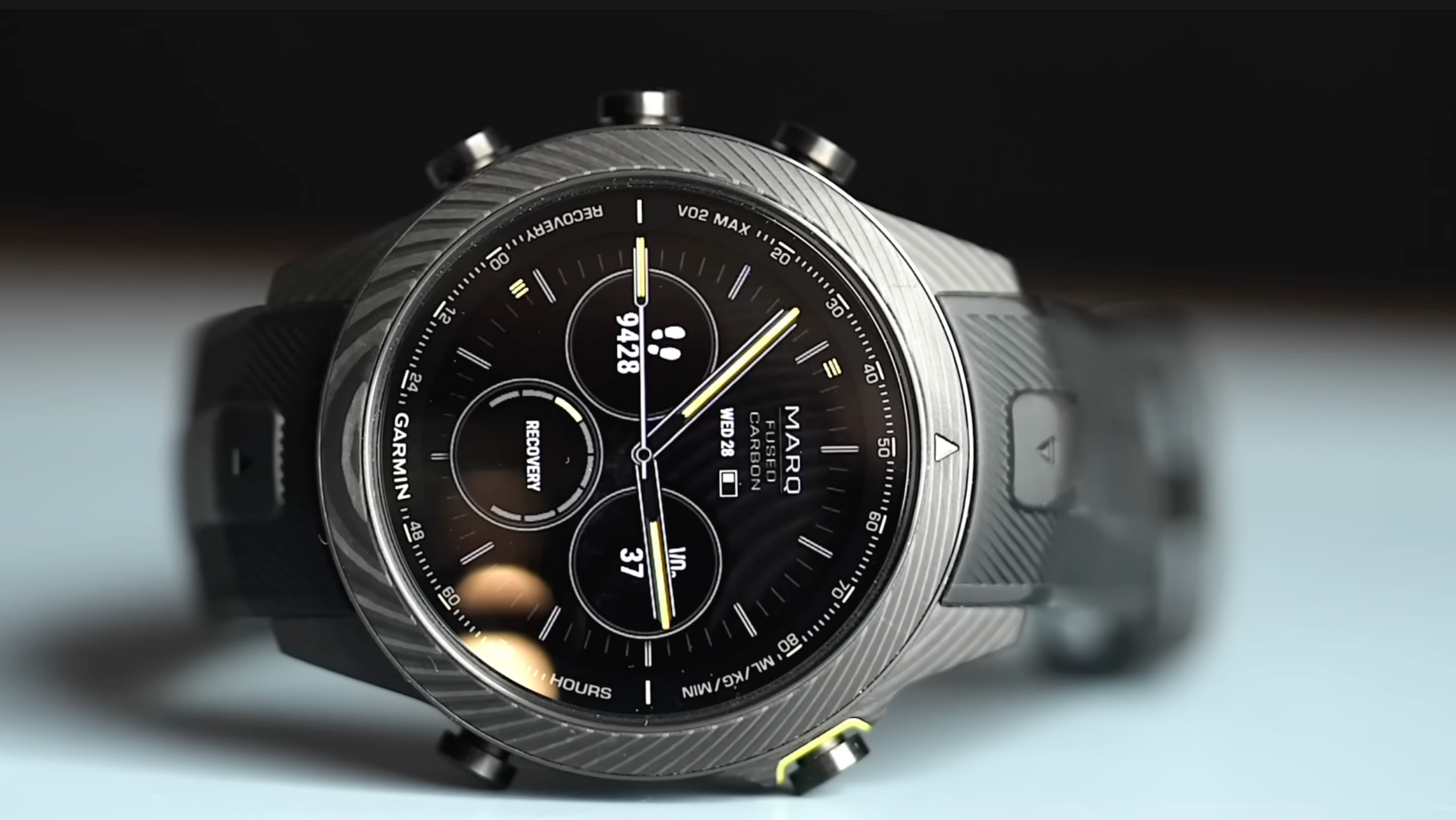
Garmin’s luxury lineup is the Garmin Marq series.
I previously wore the Garmin Marq Athlete Carbon Edition daily, which felt incredibly light for a premium watch. If I were buying today, I would choose the Garmin Marq Adventurer Damascus Steel purely for its aesthetic appeal, though it is noticeably heavy.
The Marq watches are beautiful, but they are not built for extreme sports. They are water-resistant for casual swimming but not for deep-sea diving, and they do not support LTE. If you want luxury plus extreme capability, the Garmin Fenix 8 Pro is a better choice.
Best Garmin Watch For Diving
For diving, Garmin makes a dedicated range called the Garmin Descent series.
The Garmin Descent MK3i is rated for depths up to 200 meters and supports advanced dive features, such as tank monitoring, when paired with the Garmin Descent T2 Transceiver. It can monitor multiple tanks, supports diver-to-diver messaging underwater, and still includes full fitness tracking.
This is a true specialist watch and priced accordingly.
Best Garmin Watch For Marine Use
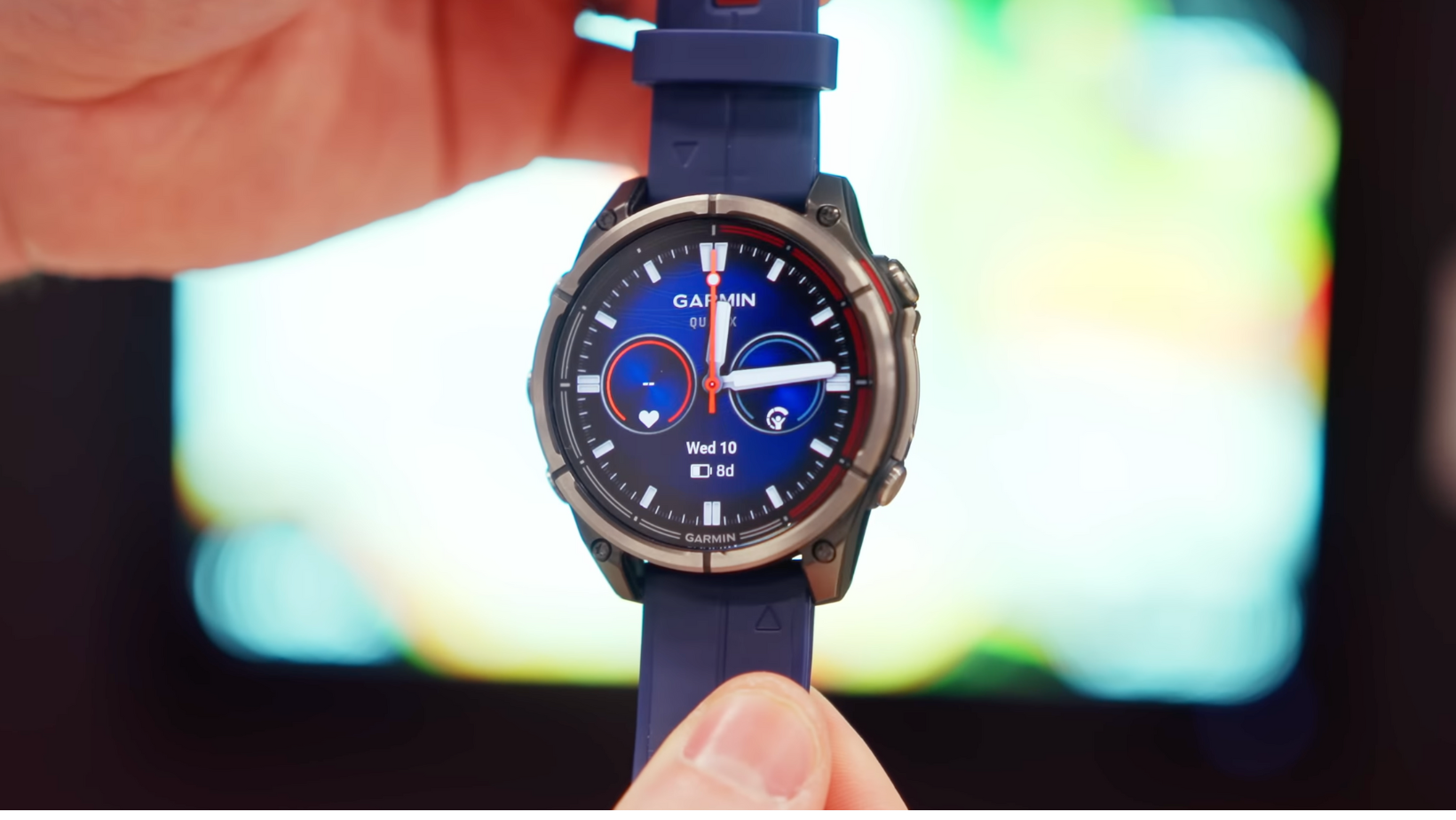
The Garmin Quatix 8 is essentially a Garmin Fenix 8 with marine branding and a unique colorway.
Most marine features are managed through Garmin apps that can also be installed on the Fenix 8. Even the Quatix watch face is available separately. If you are choosing between the Quatix 8 and Fenix 8, I would simply pick the size and color you prefer.
Best Garmin Watch For Golf
Garmin offers several golf-specific models.
The Garmin Approach S12 is extremely basic but offers massive battery life. It focuses on distances and scoring.
The Garmin Approach S50 adds an AMOLED display, heart rate tracking, wellness features, and club tracking.
The Garmin Approach S70 is the flagship. It includes a large AMOLED display, color course maps, extensive health tracking, and a lighter build than the Fenix, which helps avoid interfering with your golf swing.
Best Garmin Watch For Kids
For kids, Garmin offers the Garmin Vivofit Jr 3 and Garmin Bounce 2.
The Vivofit Jr 3 is a simple activity tracker with gamified chores and a battery that lasts up to a year. The Bounce 2 is a full smartwatch with LTE, calling, texting, GPS tracking, swim support, and safety features. Battery life is shorter, at around two days.
The right choice depends on your child’s age and the level of independence you want to give them.
Watch The Full Video
Ready to see a live comparison? You can watch the full Garmin Watch Buyer’s Guide video here.
My Final Advice On Choosing The Right Garmin Watch
After testing and handling so many Garmin watches, the biggest takeaway is that there is no single best option for everyone. Garmin builds watches around specific use cases, and once you’re clear on yours, the lineup becomes far easier to navigate.
Start with what you actually do most. Running, gym training, outdoor adventures, diving, golf, or everyday health tracking. From there, think about how often you’ll wear the watch outside of workouts, how much battery life matters to you, and whether you prefer buttons, touchscreens, or a mix of both.
In many cases, a mid-range Garmin will cover everything you need without paying for features you’ll never use. The good thing is that Garmin’s software experience is consistent across the range, so moving between models never feels like starting over.
Be honest about your needs, ignore the noise around model names, and choosing the right Garmin becomes a lot simpler than it first appears.
More From Pete Matheson
If you want more hands-on tech breakdowns, you can subscribe to my YouTube channel or sign up to my newsletter, Experiments In Progress, where I share what I’m testing each week.
