


LG just unveiled its 2026 UltraGear monitors at CES, and I got a first look at what’s coming later this year!
Access was limited, most screens were locked into demos, and I wasn’t able to freely explore menus, ports, or settings the way I normally would in my studio.
Even with those limitations, this lineup says a lot about where LG is heading. The focus is clearly on high-resolution displays that work just as well for productivity during the day as they do for gaming at night. There’s a heavy emphasis on 5K and 5K2K panels, new display technology, and a more refined approach to size and curvature.
LG told me pricing is still to be confirmed, but all of the monitors shown are targeting an April or May 2026 release.
LG UltraGear 2026 Lineup: What Was Announced at CES
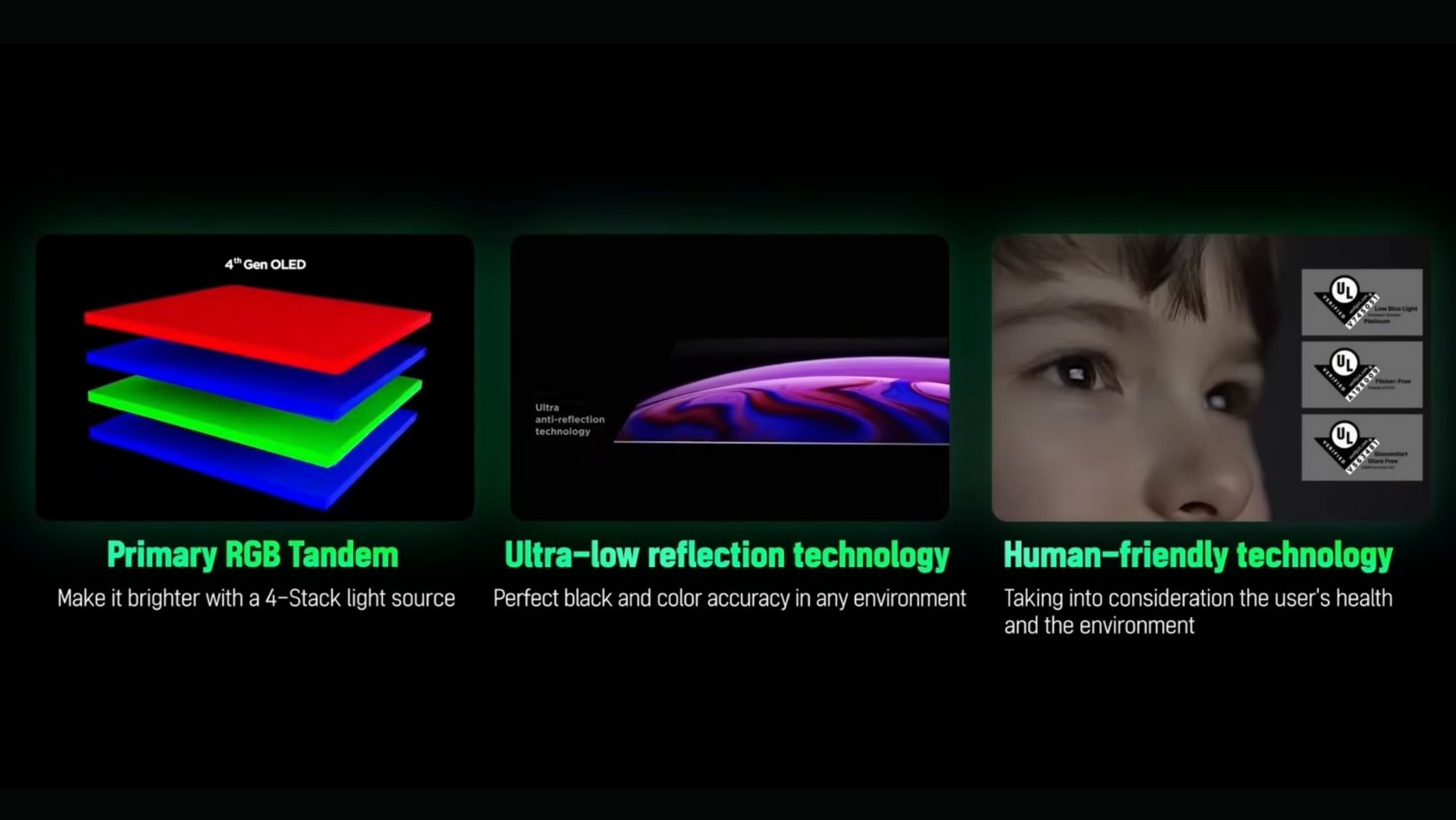
Across the board, LG’s 2026 UltraGear lineup leans into premium specs. We’re seeing new 4th Gen Tandem OLED panels, a major Mini LED upgrade, and a very large IPS option that immediately caught my attention.
Most of the monitors use matte displays this year, with one glossy exception. LG is also introducing new AI-driven features across the UltraGear Evo range, designed to improve image quality and usability without requiring new hardware on the PC side.
LG UltraGear Evo AI OLED GX9: The New Flagship
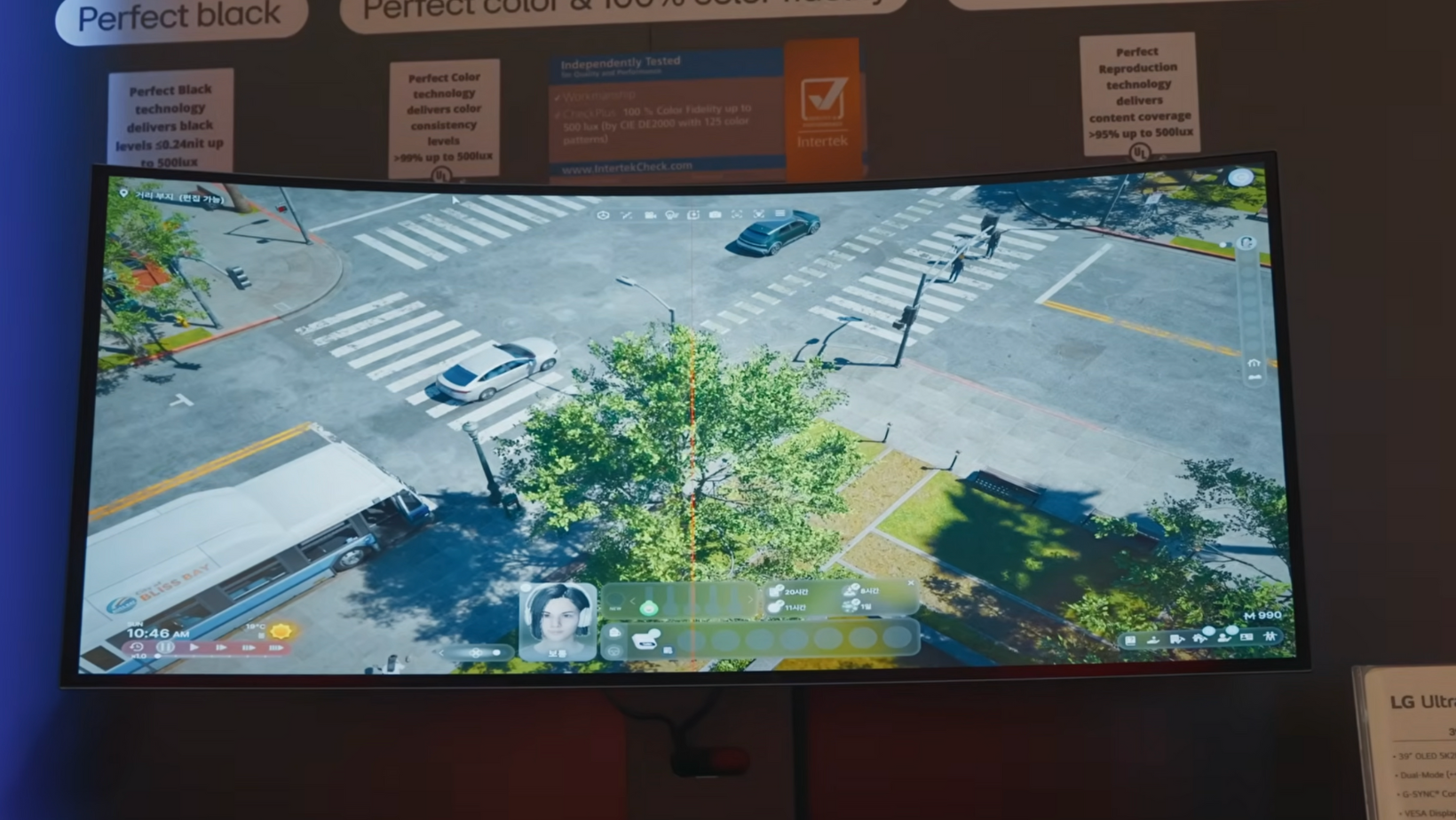
The flagship monitor for 2026 is the LG UltraGear Evo AI OLED GX9 (39GX950B). This replaces last year’s 45-inch GX9 and was designed based on direct customer feedback.
It’s a 39-inch 5K2K OLED monitor with a 5120 × 2160 resolution and around 142 pixels per inch. For many people, this size and resolution combination strikes a sweet spot. You get plenty of horizontal workspace without sacrificing clarity for productivity tasks.
The panel uses LG’s 4th Gen Tandem OLED technology with a shallower 1500R curve. That new OLED generation brings better burn-in protection and improved brightness, reaching up to 1,500 nits at peak.
This monitor supports dual mode operation, running at 165Hz at full 5K resolution or 330Hz in Full HD, both with a 0.03ms response time. You also get DisplayHDR True Black 500, 99.5% DCI-P3 coverage, DisplayPort 2.1, two HDMI 2.1 ports, and USB-C with 90W power delivery.
The only real downside for some users will be the matte finish. Aside from that, this is one of the most balanced gaming-and-productivity monitors LG has shown in years.
AI Features Across the UltraGear Evo Lineup
LG is rolling out new AI features across the UltraGear Evo lineup, starting with what they describe as the world’s first 5K AI Upscaling technology. This uses on-device AI to analyze content in real time and upscale it to 5K-class resolution without relying on your GPU.
LG demonstrated this by upscaling a Full HD signal from a Nintendo Switch to 5K. Using the on-screen menu, the feature can be toggled between Off, Low, and High, and even in a short demo, the difference was noticeable in things like foliage and road textures.
There are also AI Scene Optimization and AI Sound Optimization features, though these weren’t demonstrated at CES. These are areas I’ll be testing properly once I get these monitors into my studio.
LG UltraGear Evo AI GM9: 5K Mini LED Without Blooming
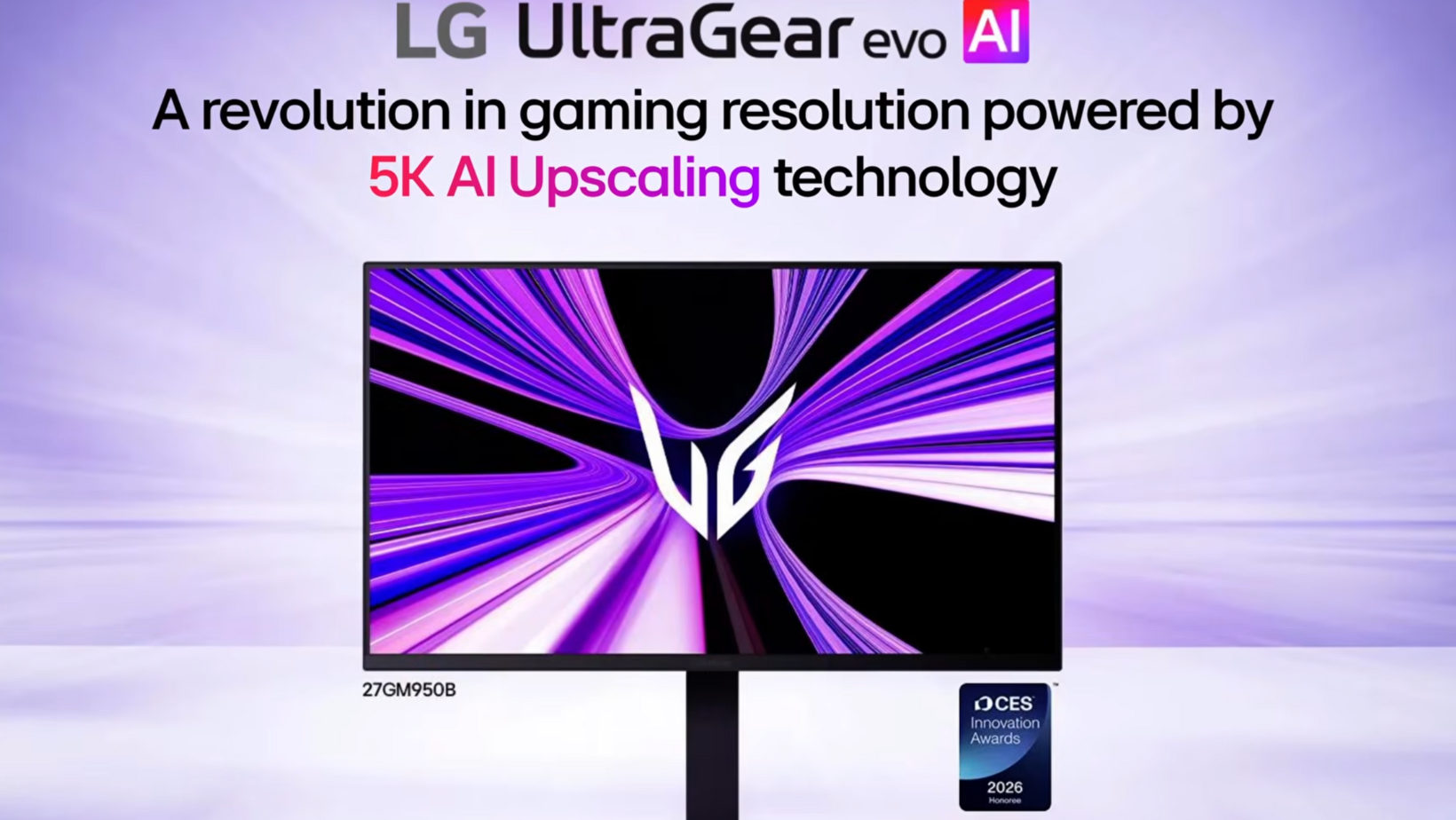
Next is the LG UltraGear Evo AI GM9 (27GM950B), which LG claims is the world’s first 5K Mini LED monitor designed to address blooming issues.
This is a 27-inch 5K display with a 5120 × 2880 resolution and an extremely sharp 218 pixels per inch. Text and UI elements look exceptionally crisp at this size.
LG is using a new Mini LED backlight system with 2,304 local dimming zones and a total of 9,216 LEDs. The reduced gap between the panel and backlight helps suppress the haloing that often affects Mini LED monitors.
Like the GX9, this monitor supports dual mode, running at 165Hz in 5K or 330Hz in Quad HD, with a 1ms response time. It carries VESA DisplayHDR 1000 certification, 99% DCI-P3 coverage, DisplayPort 2.1, two HDMI 2.1 ports, and USB-C with 90W power delivery.
LG UltraGear Evo G9: Pete’s Favorite

The monitor that stood out to me the most is the LG UltraGear Evo G9 (52G930B).
This is a 52-inch 5K2K IPS display with a 5120 × 2160 resolution and a fixed 240Hz refresh rate. There’s no dual-mode option here, but you do get a fast 1ms response time.
It supports DisplayHDR 600, covers 95% of DCI-P3, and uses a matte panel. This is the only model in the lineup that supports AMD FreeSync without NVIDIA G-Sync.
Connectivity includes DisplayPort 2.1, two HDMI 2.1 ports, and USB-C with 90W power delivery. This is currently the world’s largest 5K2K 240Hz gaming monitor, and it perfectly fits the idea of a display that handles serious productivity during the day and gaming at night.
LG UltraGear: Ultra-High Refresh OLED Gaming Monitor
Rounding out the lineup is the LG UltraGear 27GX790B, which is clearly aimed at competitive gamers.
This is a 27-inch 1440p Quad HD monitor using 4th Gen Tandem OLED technology. It runs at 540Hz at 1440p and up to 720Hz in Full HD, with a 0.03ms response time.
Peak brightness reaches 1,500 nits, and the panel carries VESA DisplayHDR True Black 500 certification with 99.5% DCI-P3 coverage. It includes DisplayPort 2.1, two HDMI 2.1 ports, and USB-C, though this model does not support USB-C power delivery.
32-Inch 4K OLED Variant (Glossy Panel)
LG also mentioned a 32-inch 4K OLED UltraGear model with a glossy display. This is the only glossy panel in the 2026 lineup and may appeal to users who dislike matte coatings.
This model was not on display at CES, so I wasn’t able to check it in person, but it’s worth keeping an eye on for anyone prioritizing image clarity and contrast over glare reduction.
Gaming and Productivity: Where LG Is Getting It Right
What I like most about this lineup is that LG is clearly thinking beyond gaming alone. Many people want a large, high-resolution screen for work during the day, then fast refresh rates for gaming at night.
By focusing on 5K and 5K2K resolutions alongside high refresh rates, LG is building monitors that don’t force that compromise. The GX9 and 52-inch G9 in particular feel designed for mixed-use setups rather than single-purpose desks.
Release Timing and What Comes Next
LG has not confirmed pricing yet, but all of the monitors shown are targeting an April or May 2026 release. Once they’re available, I’ll be testing these properly with real workloads, real games, and full access to menus and ports.
CES demos only show part of the picture. Real-world use is where these monitors will either stand out or fall short.
Watch the Full Video
You can watch my full CES 2026 LG UltraGear walkthrough on YouTube for on-floor footage and additional impressions.
Final Thoughts on LG’s CES 2026 Monitor Lineup
Overall, this is one of the strongest UltraGear lineups LG has shown in years. The specs are ambitious, the sizing choices make sense, and the focus on high-resolution gaming feels well judged.
If LG can deliver these monitors on time and price them competitively, I think they’re going to be very popular. I’m especially excited to spend proper time with the GX9 and the 52-inch G9, as both feel like monitors that genuinely push things forward rather than simply chasing numbers.
More From Pete Matheson
If you want more hands-on tech breakdowns and real-world testing, you can follow my reviews on YouTube and sign up for my free Experiments In Progress newsletter, where I share regular updates.
