


I messed up our last Android experiment. After forcing my team to ditch their iPhones for a week, I somehow left out a Google Pixel. You noticed, and thousands of likes and hundreds of comments all said the same thing: do it again and give Google a fair shot. So, when the Google Pixel 11 lineup arrived, we knew what had to happen next.
This was always going to be a tough crowd. A 2026 loyalty survey of more than 5,000 US phone owners found that 96.4% of iPhone users planned to stay with Apple for their next phone. Only 3.6% expected to leave. That gives this experiment much higher stakes than a quick hands-on.
We gave the phones a full week so the novelty had time to wear off. We’re saving the team’s reactions for the video. Here, I’ll cover what we tested and why last year’s Pixel makes the buying decision surprisingly awkward.
Why this Pixel 11 test is different
Four phones, three testers
Google released four Pixel 11 models this year: the Pixel 11, Pixel 11 Pro, Pixel 11 Pro XL, and Pixel 11 Pro Fold. We used three of them in the experiment, but the full lineup is worth comparing before we get into who used what.
Matt swapped his iPhone 17 Pro for the Pixel 11 Pro XL. Ben got the standard Pixel 11 after previously using an iPhone 13 Mini and Oppo Find X9 Pro, while I took the Pixel 11 Pro Fold because I’m comfortable using Android and iOS.
The regular Pro sat this one out, although it offers the Pro camera system in a smaller body than the XL.
The human side of the experiment is in the full video, including how everyone reacted and who considered keeping their Pixel.
What we wanted to find out
We wanted to see if Google’s Android felt familiar and if the new tools earned a place in daily life. The bigger test was simple: could any of it make Apple easier to leave?
We all started in different places, which made this more useful than another straight specs comparison.
Switching to the Google Pixel 11
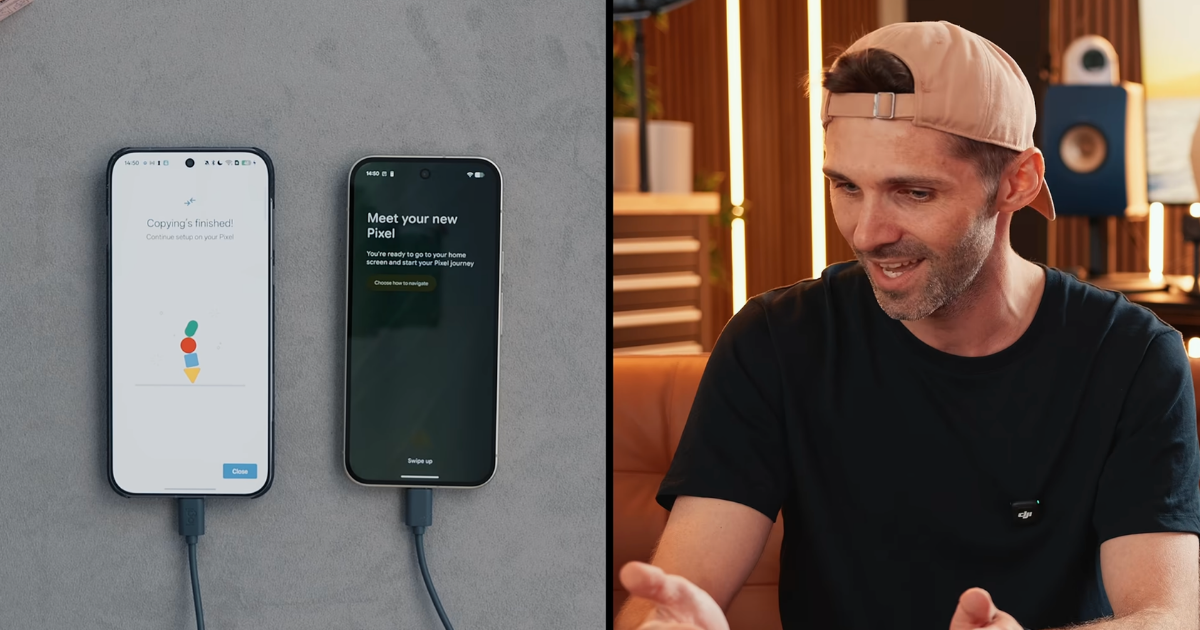
Moving everything over
Before anybody could get excited about the cameras, we had to move data, sort out SIMs, reconnect apps, and get the Google Pixel Watch 5 running.
I’ve spent plenty of time switching to Android, and the setup screen is rarely the interesting part. The real adjustment starts when you reach for something you’ve done the same way on an iPhone for years.
The Apple habits that follow you
AirDrop is an obvious example. Then there’s Face ID, the Apple Watch, and all the shortcuts that have become muscle memory.
Pixel gives you face unlock and a fingerprint sensor. We kept an eye on mobile data, WiFi, and the services you don’t think about until they become annoying. Those basics can end a switch before the cameras get a fair chance.
What we tested for a full week
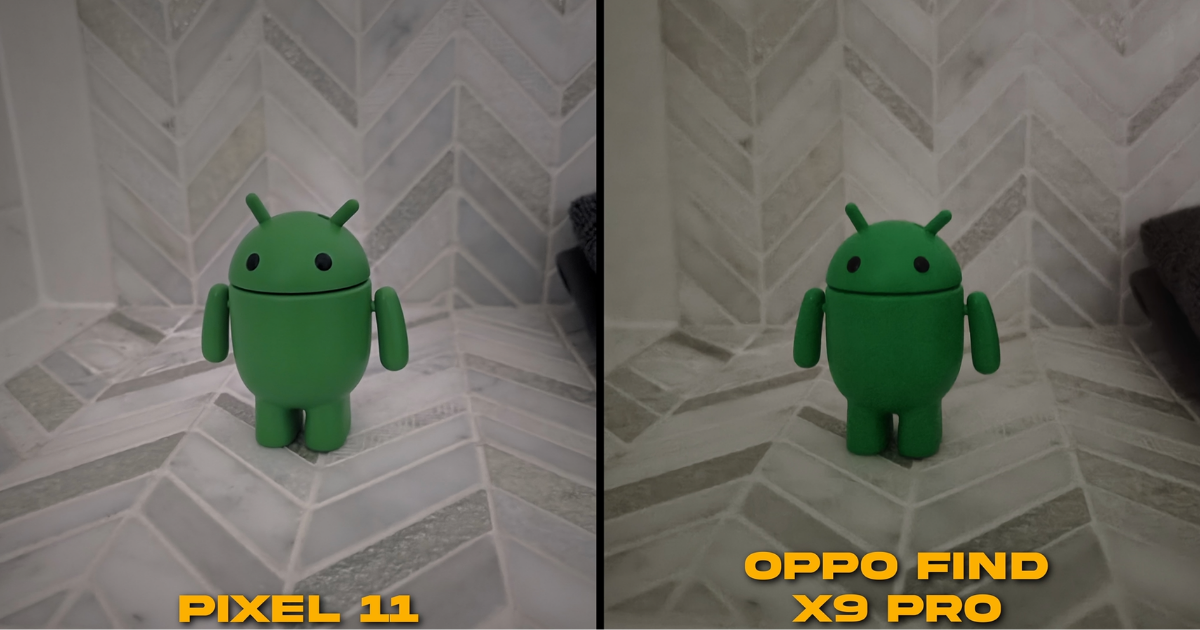
Cameras with some wild zoom numbers
The standard Google Pixel 11 has a new 48MP main sensor and a 5x telephoto camera. Super Zoom reaches 30x, while the Pro phones extend that figure to 120x with an upgraded 48MP telephoto camera.
A huge zoom number doesn’t make every distant photo worth keeping. We wanted to see when it was useful and when it felt like a one-time party trick.
We also tried Magic Capture, which aims to catch a better moment when your subject moves, and Instant Night Sight for faster low-light photos. A full week gave both features time to become useful or get forgotten.
Google’s newest software tools
Most of Google’s bigger ideas live in the software. Rambler and Sign to Text lead the new tools. Creator Suite is aimed squarely at people filming content.
It includes a teleprompter and social media cutout tools. Rambler and the new Gemini tools are meant to help with everyday conversations and tasks.
The availability was messy when we filmed. Several features weren’t ready. Some watch health tools had later release dates, and proactive Gemini actions were US-only. Other tools depended on Google Messages. If one of these features is driving the purchase, check its availability first.
The everyday phone stuff
We also looked at how the Google Pixel 11 lineup handled battery life, brightness, signal, WiFi, and unlocking. Those details decide how a phone feels by day four.
The standard display has a claimed peak brightness of 3,000 nits, while the Pro displays reach 3,600 nits. Battery life is much harder to judge by one number because apps, screen time, camera use, and signal all change the result.
Where the Pixel 11 hardware changed
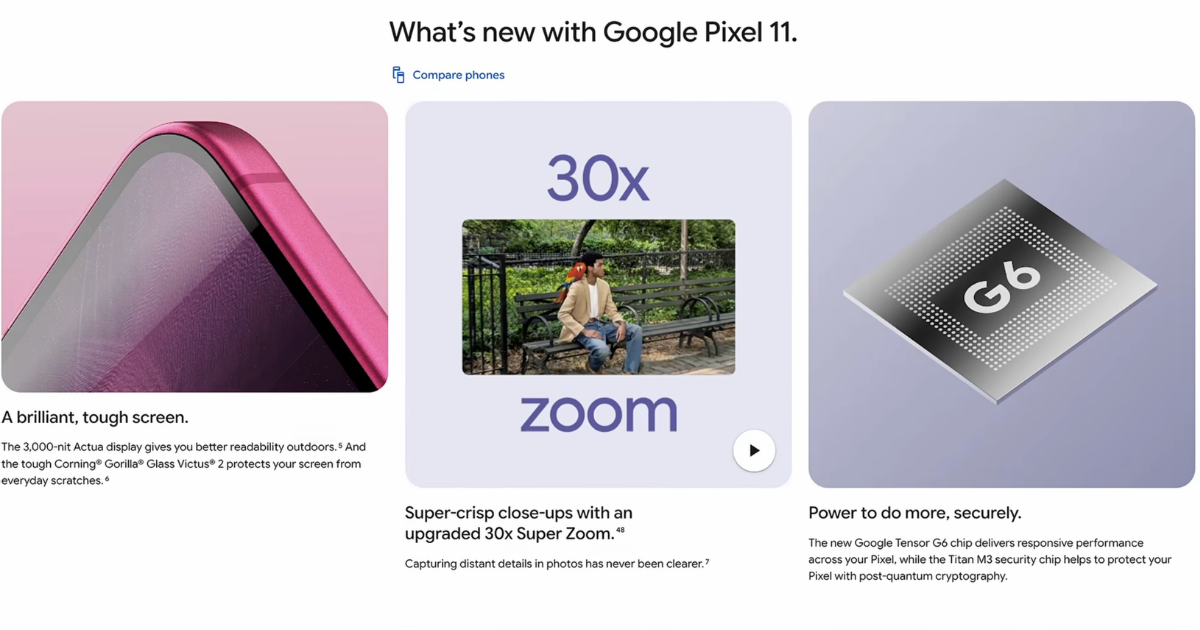
The useful new additions
Every model runs on Tensor G6 and starts with 256GB. Pixelsnap magnetic charging is included across the family, so it should feel familiar to anyone coming from MagSafe.
All four support Pixelsnap charging at up to 25W. Google says 15 minutes of wired charging can add up to 15 hours on the Pro XL.
The Fold also gains an IP68 dust and water resistance rating. That’s a practical improvement for a phone with a hinge and a $1,899 starting price.
The changes that are harder to love
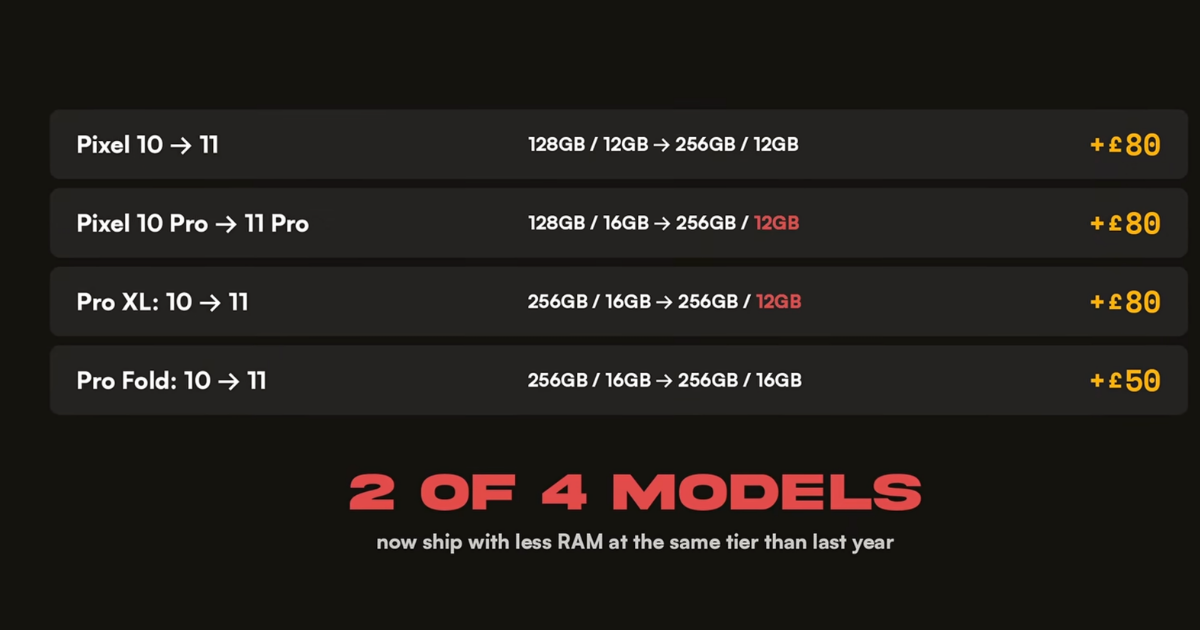
The 256GB Pro and Pro XL start with 12GB of RAM. You need to move up to 512GB to get 16GB. The Pro, Pro XL, and Fold also have slightly smaller batteries than their predecessors, while the standard phone’s capacity has increased slightly.
Google removed the thermometer from the Pro camera bar and replaced that space with HiLight. At launch, HiLight could signal Gemini activity and calls from selected contacts, but it couldn’t act as a normal notification light for every message and app. Google says more messaging support is coming, but it feels limited right now.
What Google still gets right
Android that feels familiar
People repeatedly tell me that Pixel offers the purest Android experience. I understand the point. Google’s interface is clean, and an iPhone user may recognize more of its logic than expected.
That familiarity helps when you’ve built up years of Apple habits. Pixel adds Android flexibility without making the move feel needlessly complicated.
Cameras and practical extras
Pixel cameras remain a major draw. The new sensors and longer zoom give the lineup something beyond Gemini, while the Pro and Pro XL get faster Instant Night Sight.
Pixelsnap makes sense for anyone arriving with MagSafe accessories, while the Fold’s IP rating addresses a real durability concern. Both improve the range without making an upgrade essential.
The Google Pixel 11 price problem
More money changes the conversation
Google’s launch prices start at $899 for the standard phone, $1,099 for the Pro, $1,299 for the Pro XL, and $1,899 for the Pro Fold. The first two have lost their cheaper 128GB options, while the Pro XL and Fold cost $100 more at the same 256GB capacity.
That extra storage helps, but the prices create tougher comparisons. At $1,299, the Pro XL sits in Samsung Galaxy S26 Ultra territory. At that price, I’d take the Samsung. Its hardware gives me a stronger reason to spend flagship money.
The Fold faces the same issue. Better protection and upgraded cameras are welcome, but $1,899 makes every compromise easier to notice.
Last year’s Pixel looks tempting
The original Google Pixel 10 price started at $799 for 128GB, while the 256GB version launched at $899. That matches the new standard phone at the same capacity, but last year’s model can now appear in much better promotions.
My Pixel 10 experience shows how much of the formula was already in place. It had clean software, two unlock options, strong cameras, and Pixelsnap support.
Check the current Google Pixel 10 price before paying full price for the new range. Many of this year’s additions are software-based and may reach earlier models, so the older phone could get surprisingly close for less money.
Why the upgrade is hard to recommend
It makes sense with an older phone
If your phone is several years old, its battery is struggling, or you’re due for an upgrade, the range can make sense. You get seven years of updates, 256GB, strong cameras, and Google’s newest software.
It’s also easy to approach after years with an iPhone. The interface isn’t needlessly busy, and Pixelsnap keeps magnetic charging familiar.
Already have a Pixel 10?
I’d wait. Much of the experience is familiar, several headline features are software-based, and some are likely to reach older devices.
A newer Pixel only helps if your current phone is getting in the way or the new features fit how you use it. The model number alone isn’t a reason to spend this much.
Look past the first week
The Google Pixel 11 remains one of the friendliest ways for an iPhone user to try Android. Its clean software feels approachable, and Pixelsnap makes charging familiar. The price is where I pause. The full video is where you’ll see how everyone did. Before buying, compare the new range with the current Google Pixel 10 price and focus on the parts you use every day.
For more experiments, practical tech advice, and the occasional questionable decision involving my team, join the Experiments in Progress newsletter.
Frequently asked questions
When is the Google Pixel 11 coming out?
Google announced the Google Pixel 11 lineup on August 12, 2026, and released all four phones on August 20. They’re now available in the US.
How much is the Google Pixel 11 phone?
The standard Google Pixel 11 starts at $899 with 256GB. The Pro starts at $1,099, the Pro XL at $1,299, and the Pro Fold at $1,899. Trade-ins and retailer promotions can change what you pay.
Is the Pixel 11 worth buying?
It can make sense if you’re replacing an older phone or leaving an iPhone for Android. Recent Pixel owners have fewer reasons to upgrade because many of the biggest changes come through software.
What’s different about the Pixel 11 Pro?
The Pro keeps the standard phone’s 6.3-inch size but adds a brighter Super Actua display, a more advanced camera system, up to 120x Pro Zoom, and HiLight. It starts at $1,099 with 256GB and 12GB of RAM.
Is it easy to leave iPhone for Pixel 11?
Google provides tools for moving contacts, messages, photos, and other data. Apple-specific services, accessories, and long-standing habits may take more time to replace.
