


If you are looking for a portable Bluetooth speaker right now, the JBL Flip vs Charge debate is probably the one keeping you up at night. They look similar. They are both waterproof. They both carry the JBL name. But they are not the same speaker, and buying the wrong one is a real waste of money.
I have spent the last few weeks testing the JBL Flip 7 and the JBL Charge 6 side by side. I carried them to the park, used them in the garden, and played them at full volume in my kitchen. After a few hours of testing sound quality on Spotify vs Apple Music, I usually walk away from reviews like this thinking the differences between speaker generations are pretty minor.
This time, the gap between these two models is genuinely worth paying attention to.
I am going to break down the design, sound quality, battery life, and price so you can make a sensible call.
Bigger Isn’t Always Better with JBL Flip vs Charge
You might assume the bigger speaker automatically wins. That assumption did not survive contact with reality. Both of these speakers are excellent, but they are built for very different situations.
Design and Portability
When you put the JBL Flip 7 and the JBL Charge 6 side by side, the size difference is immediately obvious. The Charge 6 is a lot bigger.
The Flip 7 is designed to be thrown into a backpack without a second thought. It weighs just under two pounds (826g) and is roughly the size of a tall can of soda. You can carry it in one hand all day without noticing it. JBL has also introduced a new PushLock accessory system, which lets you attach a fabric finger loop or a carabiner hook to the underside of the speaker. Clipping it onto a bag strap or a belt loop takes about two seconds.
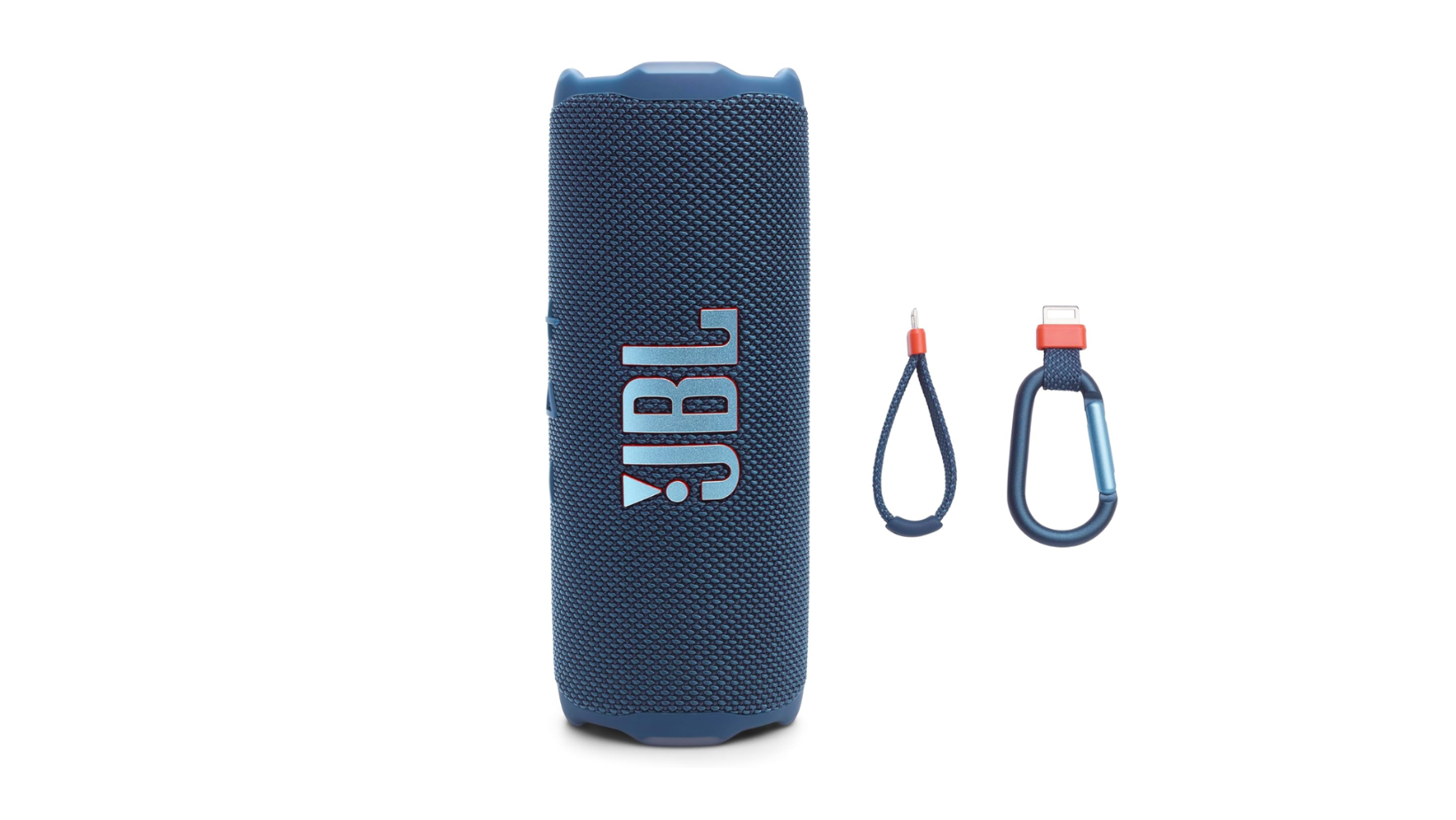
The Charge 6 is a much bulkier unit. It weighs over two pounds (960g) and takes up significantly more space. It is still portable in the sense that you can carry it around, but it is not something you will want to hold in your hand for a long walk. JBL has added a new detachable carry strap to the Charge 6, which is a practical addition, especially if you have smaller hands and cannot comfortably grip the whole speaker.
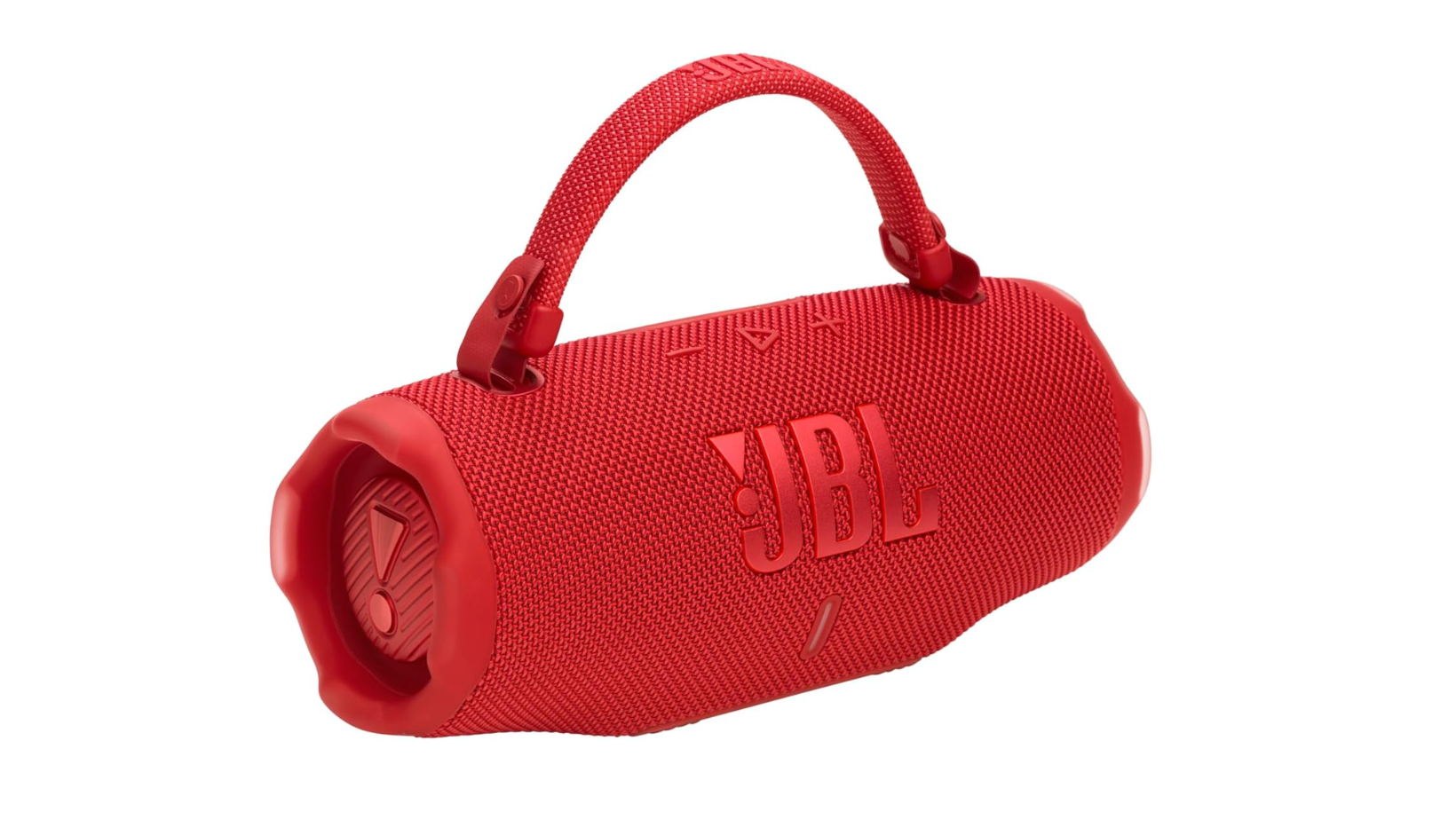
Both are built seriously well. They both carry an IP68 dust and waterproof rating, meaning you can submerge them in water for up to 30 minutes without any damage. They can handle a drop, a splash, and a day at the beach without complaint. The rubberised bumpers at either end protect the passive radiators, and the fabric mesh body feels genuinely durable.
If portability is your main concern, the Flip 7 wins easily. If you do not mind carrying a bit more weight in exchange for more speaker, the Charge 6 is the one to look at.
Sound Quality and Performance
This is where the JBL Flip vs Charge comparison gets really interesting, because the answer is not as simple as "bigger sounds better."
The Charge 6 does deliver more power and punch. It has a 40-watt output compared to the Flip 7's 35 watts, and the larger passive radiators produce significantly more low-end bass. If you listen to a lot of hip-hop, electronic, or dance music, you will really notice the extra depth.
It’s not the same quality you’d get with a soundbar or other home setup, but for a portable speaker, it’s pretty good. The Charge 6 also gets louder before it starts to strain, which makes it a better choice for outdoor gatherings or garden parties.
The Flip 7 is not far behind, though. It is clearer and more dynamic than the older Flip 6, and for its size, the bass response is genuinely impressive. The frustrating bit is that when you push it to maximum volume, you will notice a little more compression than you get from the Charge 6. It does not have the same low-end extension, and that is simply a physics problem. There is only so much a smaller cabinet can do.
Both speakers run Bluetooth 5.4 and support Auracast, which is a clever feature that lets you pair multiple compatible JBL speakers together. You can link two Flip 7s for a stereo setup, or connect a Flip 7 and a Charge 6 to fill a larger space. Neither speaker has a 3.5mm aux input, but both support lossless 24-bit/96kHz audio playback via USB-C, which is a genuinely useful addition for anyone who wants the best possible sound quality.
Both speakers also work with the JBL Portable app, which gives you access to a seven-band graphic EQ, Playtime Boost controls, and the ability to manage your Auracast speaker groups. It is a solid app and worth using.
Battery Life and Charging
Battery life is one of the biggest practical differences between these two speakers, and it is a factor that a lot of people underestimate when buying a portable speaker.
The JBL Charge 6 offers up to 24 hours of playback on a single charge. With Playtime Boost enabled in the app, that extends to 28 hours. That is enough to last an entire weekend camping trip without needing a power outlet. The trade-off with Playtime Boost is that it reduces the bass output slightly to preserve battery, but it is a worthwhile compromise if you are away from the grid.
The JBL Flip 7 gives you up to 14 hours of standard playback, or 16 hours with Playtime Boost. That is still a respectable number for a speaker of this size, and it will comfortably last a full day of use. But it is roughly half the battery life of the Charge 6, and that gap matters if you are planning longer trips.
The other major difference is that the Charge 6 doubles as a powerbank. You can plug your phone into the USB-C port on the back of the speaker and charge it up using the speaker's battery. The Flip 7 does not have this feature at all.
If you are someone who spends a lot of time away from power outlets, whether that is camping, hiking, or just long days out, the Charge 6 makes a lot more practical sense.
Price and Value
The JBL Flip 7 has an MSRP of around $150, while the JBL Charge 6 retails for around $199. Prices do fluctuate, and both speakers regularly go on sale. You can check the current price of the JBL Flip 7 and the JBL Charge 6 to see the latest deals.
Here is a quick side-by-side breakdown of the key specs:
The $50 price difference is real, but so is the value gap. For that extra money, you get nearly double the battery life, a built-in powerbank, and noticeably better bass response. That is a solid return on investment. That said, the Flip 7 is not a compromise pick. If you genuinely want something lighter and more pocketable, it is still one of the best portable speakers you can buy at that price point.
For more tech buying advice, you might also want to check out my blog for the latest reviews and recommendations, or take a look at my guide to protecting your kids online if you are picking up tech for the whole family.
The Verdict on JBL Flip vs Charge
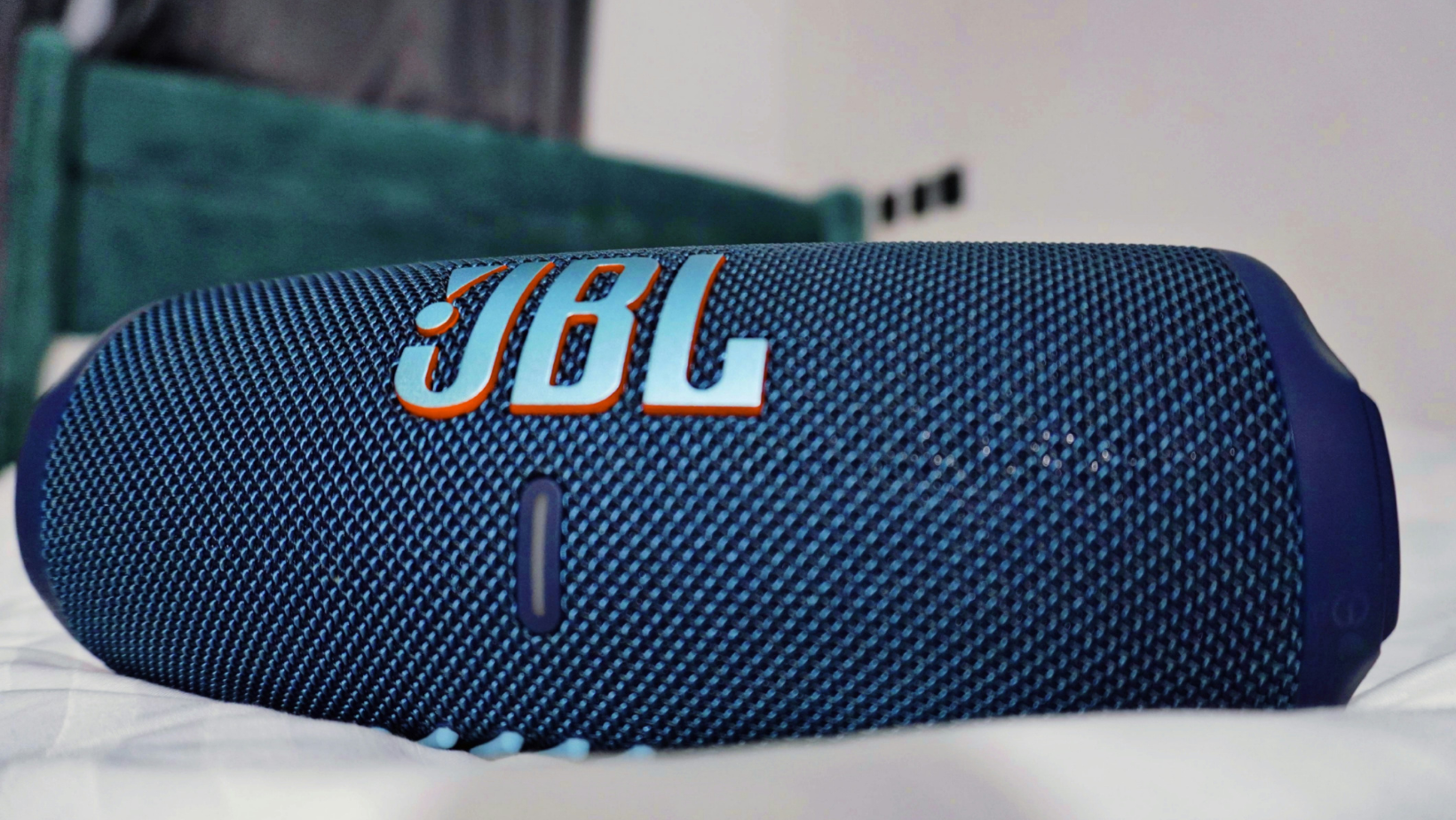
Choosing between these two speakers really does come down to how you plan to use them.
If you want a speaker you can throw in a bag and take everywhere without noticing the weight, buy the JBL Flip 7. It is cheaper, lighter, and sounds brilliant for its size.
If you want a speaker for the garden, the beach, or camping trips where you need serious battery life and the option to charge your phone, buy the JBL Charge 6. The extra bass, 24-hour battery life, and built-in powerbank make it a better all-around package for most people.
For my money, the Charge 6 is the one I would recommend to most people. But if portability is your number one priority in this comparison, the Flip 7 is absolutely the right call.
Frequently Asked Questions
Do the JBL Flip 7 and Charge 6 have a microphone?
No, neither speaker includes a built-in microphone. You cannot use them for hands-free phone calls or to trigger voice assistants like Siri or Google Assistant directly from the speaker.
Can I connect a JBL Flip 7 to a JBL Charge 6?
Yes, you can. Both speakers support Auracast, which allows you to link multiple compatible JBL speakers together to play the same audio simultaneously. This works across the Flip 7, Charge 6, and other recent JBL models that support the same technology.
Are the JBL Flip 7 and Charge 6 fully waterproof?
Both speakers carry an IP68 rating, which means they are fully dustproof and can be submerged in water up to 1.5 metres deep for 30 minutes. They are well-suited for beach trips, poolside use, and outdoor adventures in wet weather.
Can I use them while they are charging?
Yes, you can continue to listen to music on both the Flip 7 and the Charge 6 while they are plugged in and charging. This applies to both USB-C wall charging and, in the case of the Charge 6, while it is acting as a powerbank for another device.
Which JBL speaker is better for outdoor use?
The Charge 6 is the better outdoor speaker overall. Its longer battery life, louder maximum volume, and powerbank functionality make it a more practical choice for extended outdoor use. The Flip 7 is a great outdoor speaker too, but it is better suited to shorter outings where weight and portability matter more.
