


Apple has officially unveiled the iPhone 18 Pro, which means we can finally stop comparing the iPhone 17 Pro with rumors, leaked components, and increasingly specific posts from people who apparently have very good friends in Apple's supply chain.
We now know what has changed. And at first glance, perhaps not that much.
Put an iPhone 18 Pro next to an iPhone 17 Pro, and you aren't looking at the sort of redesign that immediately makes last year's phone feel ancient. The display is still 6.3 inches. The physical dimensions haven't changed. There's still a triple-camera system on the back, and much of the basic Pro formula remains familiar.
Look inside, though, and this becomes a more interesting upgrade.
The iPhone 18 Pro gets Apple's new 2nm A20 Pro chip, a much larger vapor chamber, a physical variable-aperture Main camera, a smaller Dynamic Island, improved battery figures, and a new 2TB storage option. Apple has also completely changed the color selection.
The catch? It now starts at $1,199, which is $100 more than the iPhone 17 Pro did at launch.
So if you already have an iPhone 17 Pro, is any of this enough to justify upgrading after only a year?
That's what this iPhone 18 Pro vs iPhone 17 Pro comparison sets out to answer.
The 30-second rundown
- The biggest upgrade is the camera. The iPhone 18 Pro introduces a genuine mechanical variable aperture with four settings, giving the Main camera more control over light and depth of field.
- Performance gets a substantial upgrade on paper. A20 Pro moves to a 2nm process, adds another GPU core, and is paired with a much larger vapor chamber, although Apple's performance percentages still need independent testing.
- Most iPhone 17 Pro owners don't need to upgrade. The screen size, basic design, and much of the camera system remain familiar, while the iPhone 18 Pro now starts $100 higher at $1,199.
iPhone 18 Pro vs iPhone 17 Pro specs side by side
Before getting into the details, here's how the two generations compare.
That table tells you quite a lot about this upgrade.
Apple hasn't tried to reinvent the Pro iPhone this year. Instead, it has taken the iPhone 17 Pro formula and concentrated on the camera, processor, cooling, battery, and a handful of smaller usability changes.
For me, that makes the upgrade decision less about whether the iPhone 18 Pro is better (of course it is) and more about whether the improvements affect anything you actually do with your phone.
Same body, fresh paint
Let's start with the easiest comparison.
Put it on a scale, and you'll barely notice
The iPhone 18 Pro has the same 150.0 × 71.9 × 8.75mm dimensions as the iPhone 17 Pro.
Apple has stuck with a 6.3-inch display, aluminum unibody and Ceramic Shield construction, so anyone hoping for a dramatically thinner or smaller Pro isn't getting one this year.
The iPhone 18 Pro is slightly heavier at 211g, compared with 206g for the 17 Pro.
Five grams isn't something I'd base a £1,000-plus buying decision on, obviously. You may notice it if you're holding both phones and desperately trying to justify your upgrade to yourself, but that's about it.
The more obvious visual change is the Dynamic Island.
A slimmer Dynamic Island that multitasks better
Apple has made it smaller on the iPhone 18 Pro, and it can now display up to three Live Activities at once. I've always thought the Dynamic Island is at its best when it's actually doing something useful rather than simply disguising camera hardware, so being able to fit more information into less screen space is a welcome improvement.
It's just not a reason I'd replace an iPhone 17 Pro.
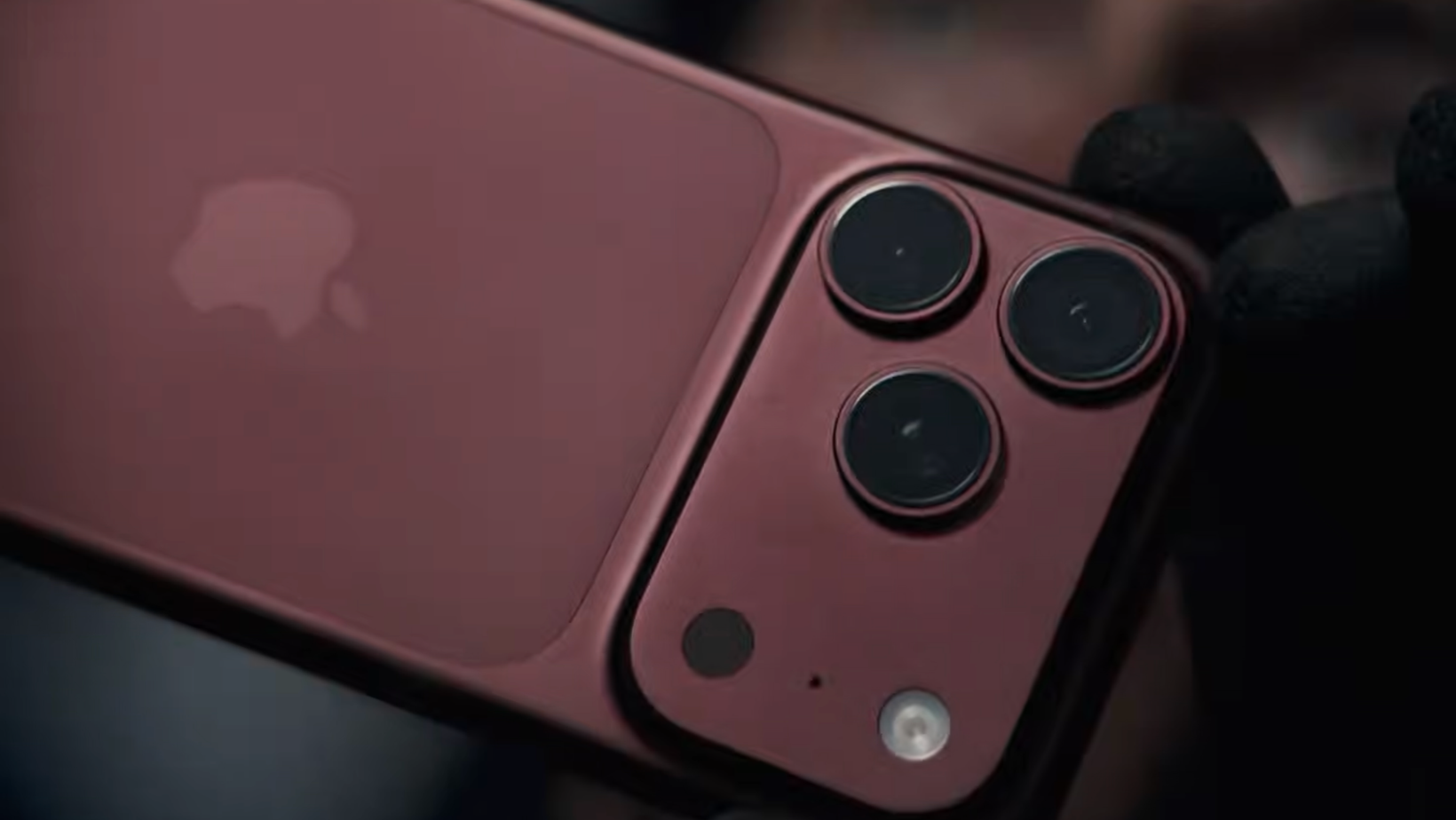
Hello, burgundy
The colors have changed completely too. The iPhone 18 Pro comes in black, silver, glacier, and burgundy.
Burgundy will probably get most of the attention because Apple knows full well that changing the color is the easiest way to let everyone in the coffee shop know you've bought the new one.
The rumored display upgrades flop
There had been quite a lot of discussion before launch about potential display upgrades for the iPhone 18 Pro.
The finished product is rather less dramatic.
A spec sheet you've seen before
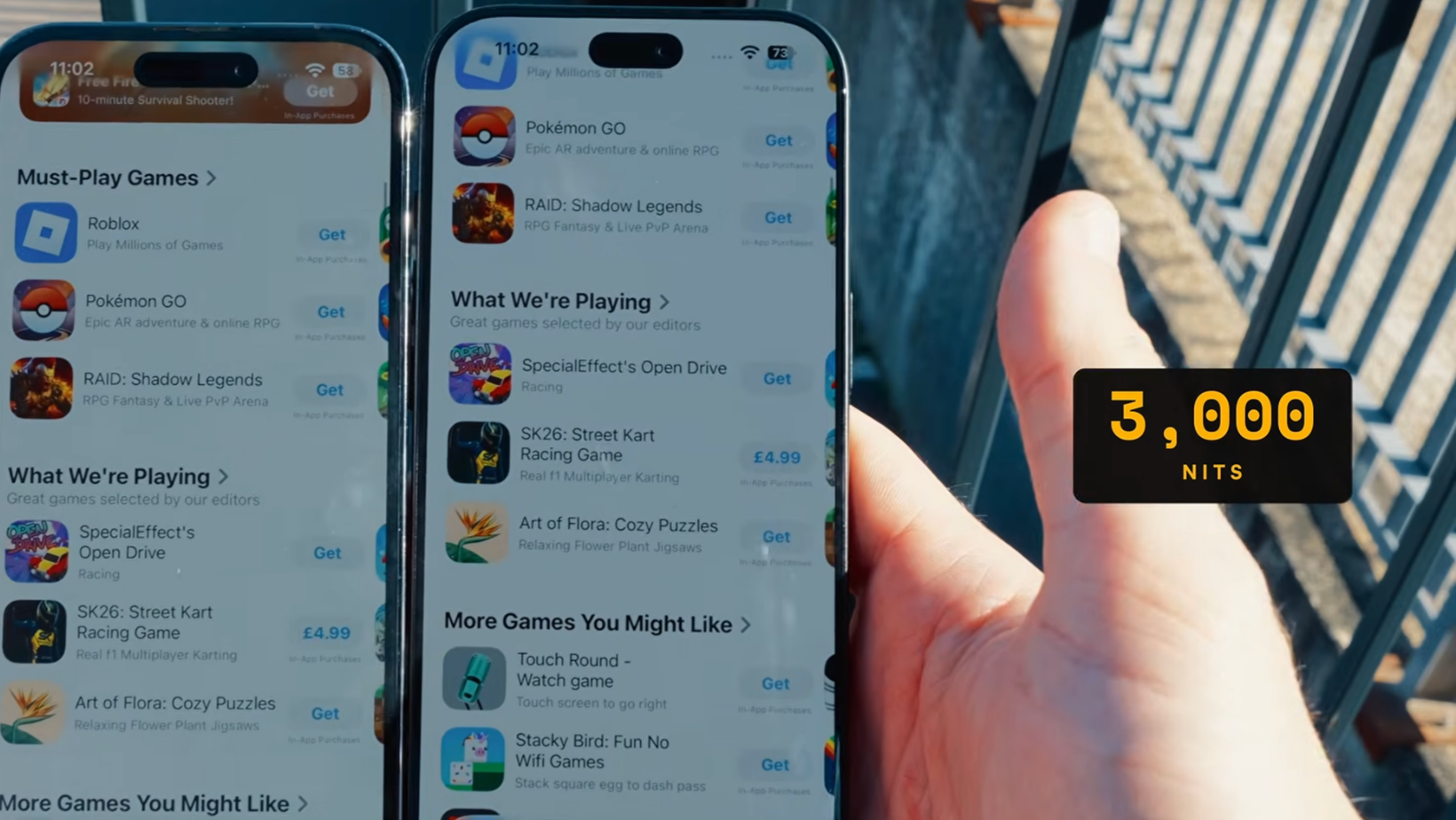
The iPhone 18 Pro's 6.3-inch OLED display packs in a 2622 × 1206 resolution at 460ppi, and it's the usual excellent Super Retina XDR panel: Always-On, ProMotion up to 120Hz, 1,000 nits for everyday use, 1,600 nits for HDR, and 3,000 nits when you're fighting direct sunlight.
In other words, this isn't where I'd be looking for a reason to upgrade.
Apple hasn't documented an increase in screen size, maximum refresh rate, resolution, or peak brightness over the iPhone 17 Pro generation.
What happened to LTPO+?
There had also been rumors that the iPhone 18 Pro would use LTPO+ display technology. Apple hasn't said that in its final specifications, so I wouldn't treat it as a confirmed feature simply because it appeared in pre-launch reporting.
The smaller Dynamic Island is the meaningful display-related change.
If you've got an iPhone 17 Pro and your main concern is the screen, I'd keep your money.
The iPhone 18 Pro camera brings the biggest glow-up
This is the part of the iPhone 18 Pro that I find much more interesting.
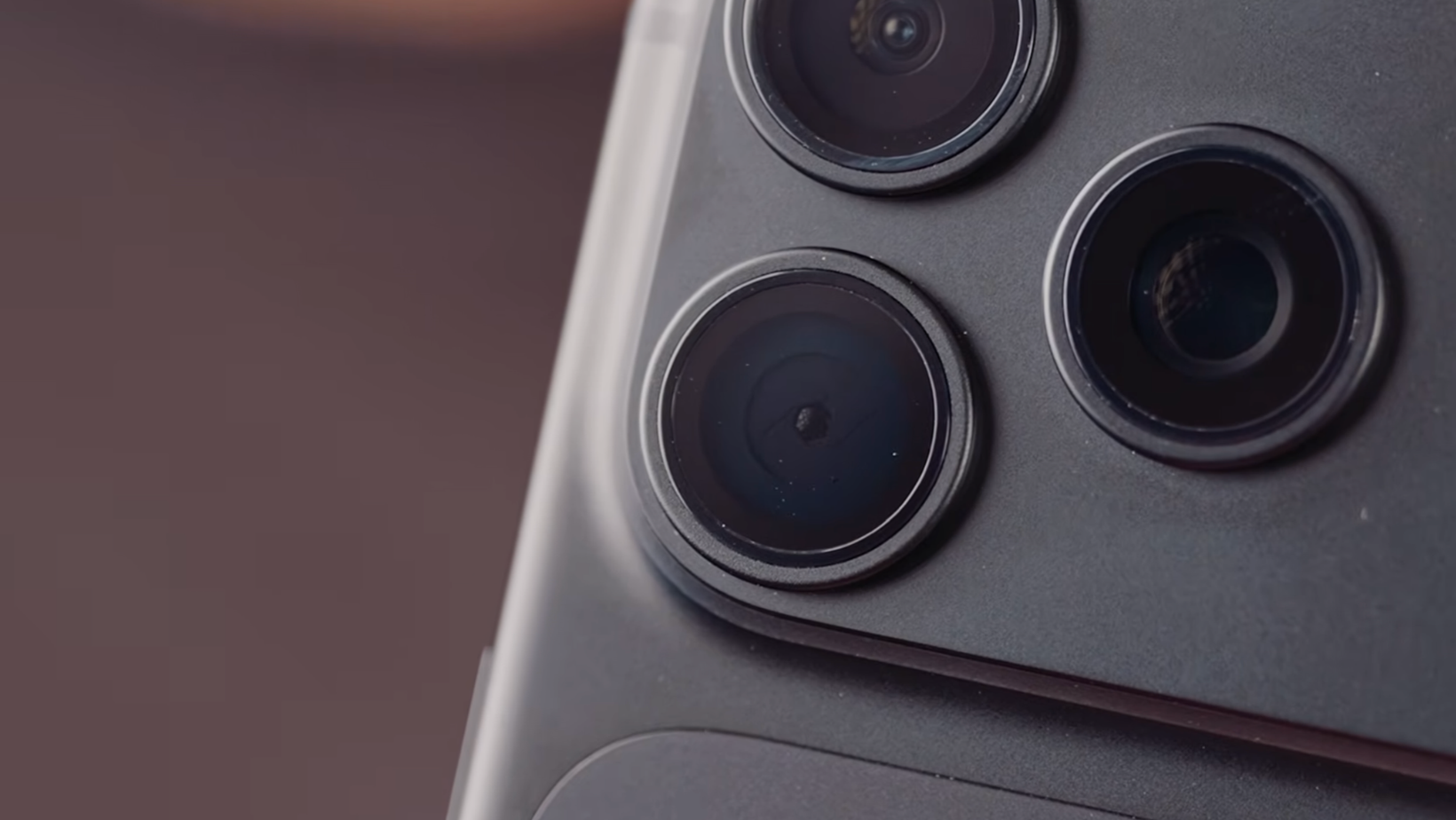
Apple has introduced a physical variable aperture on the 48MP Fusion Main camera.
That's worth explaining because this isn't simply another computational photography mode with a fancy name.
The phone camera gets physical
The camera contains six laser-cut aperture blades controlled by a rotor mechanism, allowing it to physically switch between:
- ƒ/1.48
- ƒ/1.8
- ƒ/2.8
- ƒ/4.0
The iPhone can adjust the aperture automatically depending on the scene, or you can control it manually through the Pro camera controls.
That's a proper hardware change.
Light and focus in your hands
Aperture affects how much light reaches the sensor and how much of the image appears in focus. A wider aperture such as ƒ/1.48 allows more light in and can create shallower depth of field. Move towards ƒ/4.0, and you can keep more of a scene in focus.
Smartphone cameras have spent years using computational photography to simulate some of these effects. The iPhone 18 Pro is giving the Main camera actual optical control over them.
For photographers and creators, I think that's easily the most compelling reason to look at the 18 Pro.
Same trusty Ultra Wide and Telephoto
Apple's iPhone 18 Pro technical specifications confirm the main camera is still a 48MP Fusion sensor with 24mm and 48mm options, the Ultra Wide is still 48MP, and the Telephoto hasn't moved much either, still a 48MP system with 4× and 8× optical-quality views and up to 40× digital zoom.
So this isn't a completely new camera system. The real generational change is that variable aperture.
That's actually refreshing. We've reached the point where increasing megapixel numbers every year doesn't tell you very much about whether a phone will take better photographs. Giving the camera more physical control over how it captures an image could have a much more meaningful effect.
I've gone into the camera changes in much more detail in my breakdown of the iPhone 18 Pro camera.
What about video?
If you shoot video on your iPhone, both generations are already extremely capable.
Pro video tools you already love
The iPhone 18 Pro's Main camera can record 4K Dolby Vision at up to 120fps, while Apple's Pro video tools include ProRes, ProRes RAW, Apple Log 2, and genlock.
There's also Dual Capture, Audio Mix, and improved low-light video.
Missed selfie camera opportunity
The front camera remains an 18MP Center Stage camera with autofocus and 4K Dolby Vision recording at up to 60fps.
Again, that tells us something important about this generation: Apple hasn't replaced everything simply because the number on the box went from 17 to 18.
If you're already using an iPhone 17 Pro for video, your phone hasn't suddenly become bad at it.
I'd be looking much more closely at whether the variable-aperture Main camera improves the type of content you shoot, and whether the A20 Pro and new thermal system make longer, more demanding recording and editing workflows noticeably better.
A20 Pro vs A19 Pro chip showdown
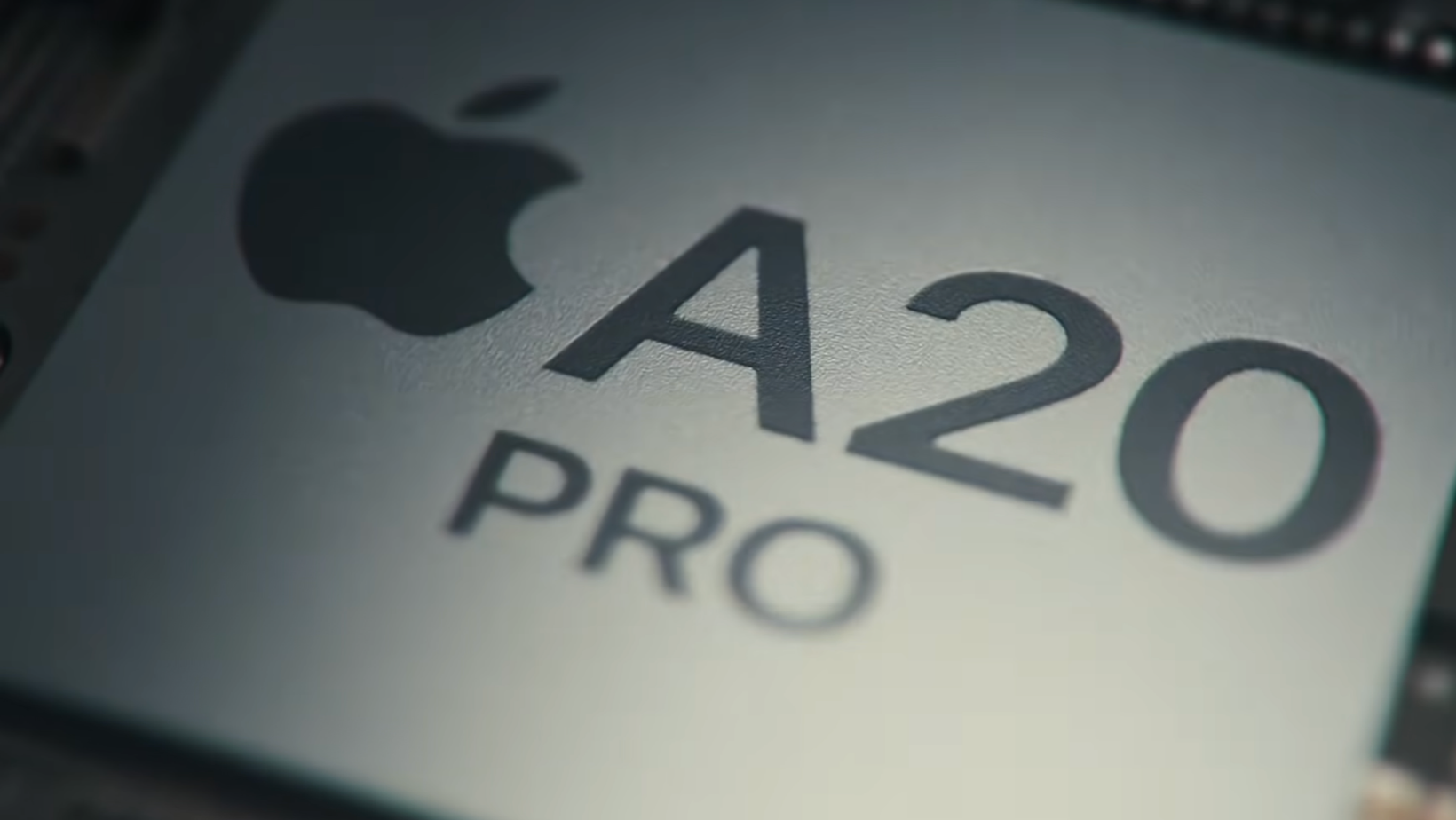
The second big change is buried inside the phone. The iPhone 18 Pro runs on Apple's new A20 Pro, built on a 2-nanometer process with a six-core CPU, a seven-core GPU with Neural Accelerators, and dual 16-core Neural Engines.
Compare that to the A19 Pro's six-core GPU and single Neural Engine, and yeah, this is more than a name change.
Big claims from Apple
Apple is making some fairly large performance claims.
According to the company, A20 Pro offers 50% higher memory bandwidth, up to 40% faster GPU performance, twice the AI processing power, and up to 40% better sustained performance, depending on which comparison you're looking at.
Those numbers come from Apple, so I'd treat them as exactly that: Apple's performance claims.
They're useful for understanding where Apple says the improvements are, but I wouldn't turn “up to 40%” into “your iPhone is now 40% faster” without independent benchmarking.
Speed you won't notice scrolling Instagram
And for most people, raw speed probably isn't the interesting part anyway. The iPhone 17 Pro is already a very fast phone.
If your daily routine consists of WhatsApp, email, Safari, Instagram, YouTube, and taking pictures of your dog, you're unlikely to pick up an iPhone 18 Pro and suddenly wonder how you ever survived the primitive computing conditions of 2025.
Where A20 Pro could make more sense is in gaming, video editing, AI workloads, and other sustained high-performance tasks.
And that's partly because Apple hasn't changed the chip.
A bigger vapor chamber keeps things cool
This could end up being one of the less glamorous but more useful upgrades. Apple says the vapor chamber in the iPhone 18 Pro has three times the surface area of the system used in the iPhone 17 Pro generation.
Heat is the enemy of speed
That makes a difference because peak performance and sustained performance are different things.
A processor can be incredibly fast for a short burst, but if the phone gets too hot, performance has to be reduced. Better cooling gives the chip more room to keep running hard before thermal limitations become a problem.
That's particularly relevant for gaming, video editing, long camera sessions, and increasingly demanding AI features.
Apple is specifically claiming improved sustained performance with the iPhone 18 Pro, and the much larger vapor chamber helps explain where some of that improvement is supposed to come from.
Again, I want to see independent thermal testing before declaring it a revolution.
But if you regularly push an iPhone hard, I'd pay more attention to this than another benchmark showing that Messages opens 0.07 seconds faster.
AI gets a hardware boost
AI is obviously becoming a bigger part of Apple's hardware story too.
The A20 Pro has dual 16-core Neural Engines, compared with the single 16-core Neural Engine in the A19 Pro, and Apple says AI processing power has doubled.
That doesn't automatically mean every Apple Intelligence feature runs twice as fast.
Software, memory, whether a task runs locally or through Apple's servers, and the specific model being used all affect the experience.
Still, it's fairly clear where Apple is heading. More AI processing is moving onto devices, and the company is designing its latest chips around those workloads.
A win for people who keep phones forever
If you keep phones for four or five years, I think that's potentially more relevant than it is if you're deciding whether to replace a one-year-old 17 Pro today.
The 17 Pro isn't being abandoned by Apple Intelligence. The 18 Pro simply gives Apple more hardware headroom for whatever comes next.
Apple promises longer battery life
Battery life is another area where the iPhone 18 Pro moves forward.
Apple rates it for up to:
- 24 hours of typical use
- 36 hours of video playback
- 33 hours of streamed video
The company doesn't publish battery capacity in the material included in my research, so I'm not going to invent a mAh figure or pretend we know something Apple hasn't actually stated.
The more useful point is that Apple's rated battery figures have increased.
Wired and MagSafe charging get quicker
Charging is faster, too. Apple says the iPhone 18 Pro can reach 50% charge in around 15 minutes with a compatible 60W-or-higher USB-C power adapter, like Apple's own 40W Dynamic Power Adapter with 60W Max, using Adjustable Voltage Supply.
MagSafe can reach 50% in around 30 minutes when Apple's MagSafe Charger is paired with a 30W-or-higher adapter, while MagSafe and Qi2 charging reach up to 25W.
That's a useful quality-of-life improvement.
Everyday battery life is still TBD
Whether the battery actually lasts noticeably longer in everyday use is something I want to see tested independently, particularly once people start hammering the camera, 5G and all the new AI features.
Apple's battery figures are based on Apple's own testing conditions. Your Tuesday probably isn't.
If battery is the main reason you're considering upgrading, I've broken down iPhone 18 Pro Max battery life separately.
Storage hits 2TB
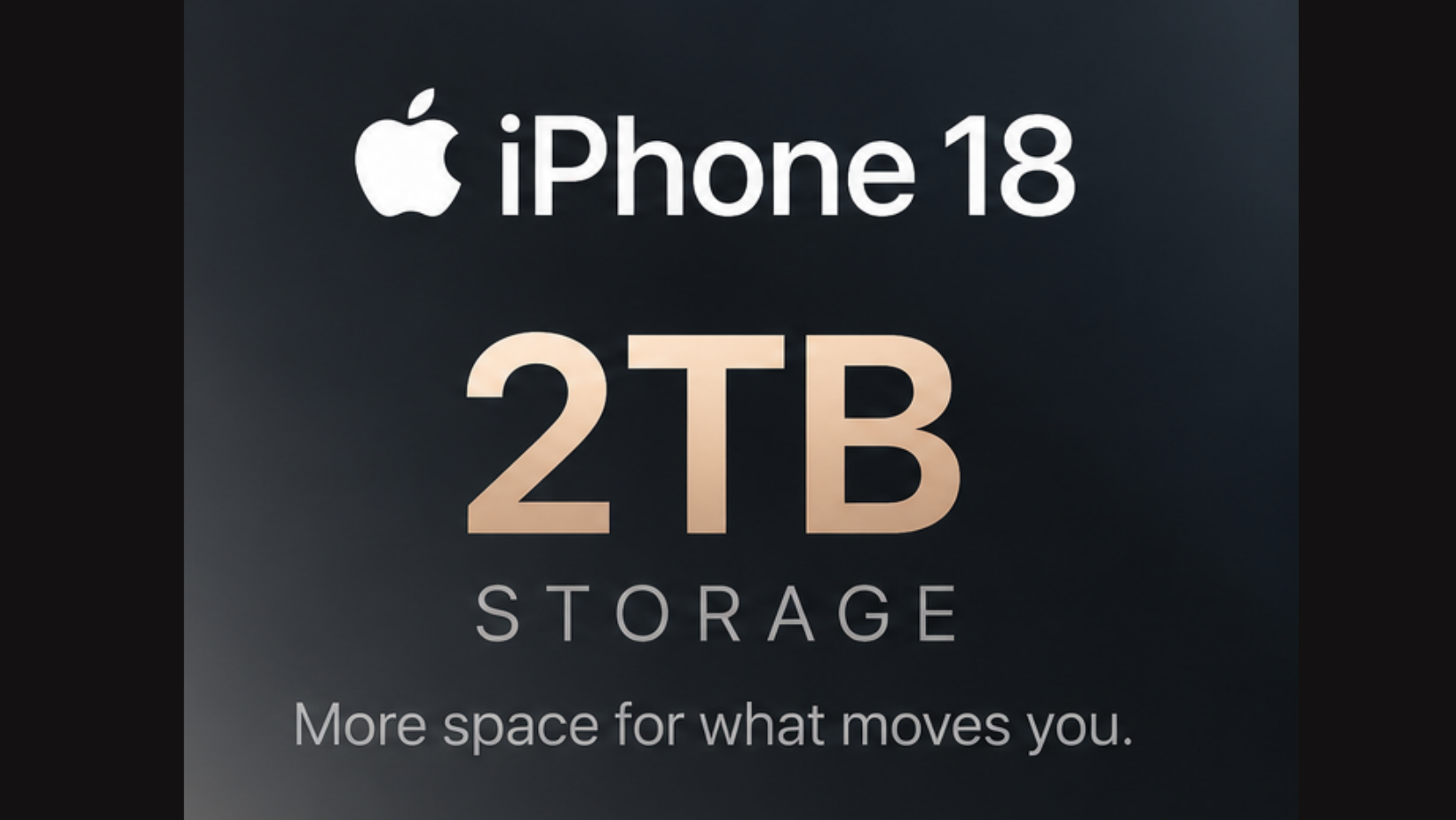
The iPhone 18 Pro now comes in:
- 256GB
- 512GB
- 1TB
- 2TB
The iPhone 17 Pro topped out at 1TB, so the 2TB configuration is new for the smaller Pro. For the overwhelming majority of people, this won't matter.
For anyone shooting huge amounts of ProRes video, storing large creative projects locally, or using an iPhone as a serious production device, it's nice to have.
It's also $2,399 in the US.
At which point I suspect most people will discover that 256GB suddenly feels remarkably spacious.
Faster uploads with the C2 modem
The iPhone 18 Pro also picks up Apple's C2 modem, which Apple's billing as smarter about cellular, faster on uploads than the outgoing C1X, and about 15% easier on the battery. It still does mmWave in the US, for what that's worth these days.
Alongside that, Apple's N1 wireless chip handles Wi-Fi 7, Bluetooth 6, and Thread. These are the sort of upgrades that don't make for particularly exciting launch-day conversations but can improve the overall phone experience.
Connectivity improvements can affect battery consumption, upload speeds, and reliability far more often than most of us think about the modem inside our phones.
Still, I wouldn't replace an iPhone 17 Pro purely because the modem has a new number.
Reference Image fights fake photos
One of the more unusual additions to the iPhone 18 Pro is something Apple calls Reference Image.
Here's how it works: the Main camera sensor signs every pixel the moment you take the shot, and Private Cloud Compute turns that signed data into what Apple calls an unalterable reference image.
Apple's opening up APIs across iOS, iPadOS, and macOS 27 too, so third-party apps will eventually be able to check that signature themselves.
For an internet full of AI fakes
The obvious context here is image authenticity. As generative AI makes it increasingly difficult to tell whether an image has been captured, generated, or substantially altered, having a way to establish a trusted reference at the point of capture could become genuinely useful.
It's probably not the feature that sells millions of iPhones this year, but I think it's one of the more interesting additions in terms of where photography is heading.
The iPhone 18 Pro is $100 more expensive
And now we arrive at the bit that makes the upgrade calculation harder. The iPhone 18 Pro starts at $1,199 for 256GB.
The iPhone 17 Pro technical specifications document the previous-generation model, which launched at $1,099 in the US. So we're looking at a $100 increase, or roughly 9.1% at the starting price.
iPhone 18 Pro prices by storage
The iPhone 18 Pro pricing is:
Interestingly, the increase is actually smaller than some pre-launch forecasts suggested. TrendForce had predicted higher component costs could push prices up by 10–20%, while the eventual US starting-price increase landed at around 9%.
That's better than a 20% increase. I'm not sure anyone standing at the checkout will find that enormously comforting.
I've broken down the pricing separately in iPhone 18 Pro Price: Is Apple's New Pro iPhone Worth the Upgrade?
The stuff Apple didn't touch
This is the core question at the heart of any iPhone 18 Pro vs iPhone 17 Pro decision. Quite a lot stays familiar.
You still get a 6.3-inch ProMotion OLED display. The phone has exactly the same external dimensions. There's still a triple 48MP rear-camera arrangement, with the same broad Main, Ultra Wide, and Telephoto structure. The front camera remains an 18MP Center Stage unit.
The display doesn't get a documented resolution, maximum refresh rate, or peak-brightness increase either. And that's before we get to all the things the iPhone 17 Pro was already extremely good at.
Your 17 Pro still holds up
It was already fast, already had a great camera and a 120Hz ProMotion display, and already came with a vapor chamber and Apple Intelligence built in.
That's why I think the phrase “worth upgrading” needs a bit of context. The iPhone 18 Pro is clearly the better phone.
That doesn't make the iPhone 17 Pro suddenly a bad one.
iPhone 18 Pro vs iPhone 17 Pro: The upgrades you’ll notice?
If you're stuck thinking, "should I upgrade to iPhone 18 Pro?", strip away the launch-event numbers, and there are four changes worth paying attention to.
1. The variable-aperture camera
This is the big one. It's new hardware; it changes what the Main camera can physically do, and it gives more control to people who care about photography.
If the iPhone is one of your main cameras for work, YouTube, social content, or photography, this is the feature I'd investigate before anything else.
2. Better sustained performance
A20 Pro is faster on paper, but the larger vapor chamber could be just as important.
If you edit video, game heavily, or regularly push the phone hard enough to run into thermal limits, the combination should be much more relevant than it is to somebody using an iPhone for ordinary daily tasks.
3. Battery and charging
Longer battery life is one of those upgrades everyone benefits from. Faster wired charging is welcome too, particularly if you're the sort of person who remembers your phone is on 12% approximately seven minutes before leaving the house.
4. The smaller Dynamic Island
It's nice, and it's useful, but absolutely not a reason I'd spend $1,199.
Is it time to trade in your iPhone 17 Pro for the iPhone 18 Pro?
Weighing an iPhone 18 Pro upgrade? For most iPhone 17 Pro owners, I wouldn't rush into it.
You've got a phone that's a year old and shares a surprising amount with the new model. The display is extremely similar, the physical dimensions are identical, the broad camera configuration remains familiar, and A19 Pro isn't suddenly going to struggle with everyday apps because Apple has released another chip.
Photographers and creators, listen up
The calculation changes if you're heavily invested in photography or demanding creative work.
The variable-aperture camera is a genuine hardware addition rather than a minor software tweak. If you understand why you'd want to switch between ƒ/1.48 and ƒ/4.0, there's a good chance you'll get considerably more out of this upgrade than somebody who leaves the camera in automatic mode and takes 600 photographs of their lunch.
Likewise, creators doing serious video work may benefit more from the A20 Pro, larger vapor chamber and improved sustained performance.
Battery life could also be enough to push some people over the edge, particularly if your 17 Pro battery has already had a very enthusiastic year.
But I'd struggle to recommend paying for an annual upgrade simply because A20 Pro benchmarks higher or the Dynamic Island is a bit smaller.
Rocking an older iPhone?
This is where the iPhone 18 Pro becomes much easier to recommend.
If you're coming from an iPhone 15 Pro, 14 Pro, or something older, you're stacking several generations of improvements rather than comparing two very similar phones released 12 months apart.
The camera changes become more substantial, the performance gains stack up, and battery improvements are easier to notice. You're getting newer connectivity, newer display and durability improvements, and several generations of Apple's computational photography and video work at once.
Patience pays off
That's generally how I think about iPhone upgrades now. Annual improvements can be interesting without being necessary.
Apple doesn't need every iPhone 17 Pro owner to replace their phone in September 2026 for the iPhone 18 Pro to be a good product. For somebody who has waited three or four years, the exact same set of improvements looks much more compelling.
Sizing up to the iPhone 18 Pro Max
The other obvious option is the iPhone 18 Pro Max. It starts at $1,299, so there's a $100 difference between the equivalent 256GB Pro and Pro Max models.
The Pro Max gives you a 6.9-inch display and Apple's higher battery ratings, while the core Pro feature set remains very similar.
If you're already prepared to spend $1,199 and you like a large phone, I think it's worth comparing the two before buying. That's the exact question my iPhone 18 Pro vs Pro Max piece tries to answer.
The $1,999 foldable wildcard
And then, of course, there's the iPhone Duo.
Apple's first foldable starts at $1,999, so we're talking about a very different budget and a very different type of device. If you're tempted by the shiny new thing but aren't sure you need a folding iPhone, I lay out the foldable iPhone vs iPhone 18 Pro Max case in full elsewhere.
iPhone 18 Pro vs iPhone 17 Pro: my verdict
This iPhone 18 Pro vs iPhone 17 Pro comparison leaves me thinking the upgrade is more interesting than it initially looks.
From the outside, Apple has barely touched the formula. It's the same size as the iPhone 17 Pro, the screen specifications are extremely familiar, and the overall design isn't going to make anyone mistake it for an entirely new category of iPhone.
Most of the meaningful work has happened underneath.
The variable-aperture Main camera is easily my favorite change because it's real camera hardware that could alter how people shoot.
A20 Pro and the much larger vapor chamber make sense for increasingly demanding workloads, while better battery figures and faster charging are practical improvements almost everyone can appreciate.
The smaller Dynamic Island is nice. The new colors are nice. Having 2TB available is nice if you happen to need enough iPhone storage to accommodate a small film studio.
None of those would convince me to replace an iPhone 17 Pro on their own, especially with a $100 price increase.
At $1,199, I'd want a clear reason for upgrading from a phone that's only 12 months old. For photographers, filmmakers, heavy gamers, and people who regularly push their phones hard, there are reasons here.
For everyone else, the iPhone 17 Pro remains an extremely capable phone.
I'd keep it for another year.
For more upgrade decisions like this one, and the real-world testing behind them, you can join my Experiments in Progress newsletter.
FAQs
What is the difference between iPhone 18 Pro and iPhone 17 Pro?
The biggest iPhone 18 Pro differences are the A20 Pro processor, physical variable-aperture Main camera, larger vapor chamber, smaller Dynamic Island, improved Apple-rated battery figures, and a new 2TB storage option. The basic dimensions and 6.3-inch display size remain unchanged.
Is the iPhone 18 Pro worth upgrading to from the iPhone 17 Pro?
For most iPhone 17 Pro owners, probably not after only one year. The upgrade makes more sense for people who will use the variable-aperture camera, need better sustained performance, or particularly value the battery and charging improvements.
Is the iPhone 18 Pro camera better than the iPhone 17 Pro?
The iPhone 18 Pro introduces a physical variable aperture on its 48MP Main camera, with ƒ/1.48, ƒ/1.8, ƒ/2.8 and ƒ/4.0 settings. This gives the camera greater optical control over light and depth of field. Real-world image-quality differences still need to be judged through independent testing.
Is the iPhone 18 Pro faster than the iPhone 17 Pro?
Apple says A20 Pro delivers higher memory bandwidth, faster GPU performance, more AI processing power, and better sustained performance than the previous Pro generation, depending on the comparison. These are Apple's performance claims rather than independent benchmark results. The new phone also has a vapor chamber with three times the surface area of the previous generation.
Is the iPhone 18 Pro the same size as the iPhone 17 Pro?
Yes. Both measure 150.0 × 71.9 × 8.75mm. The iPhone 18 Pro is slightly heavier at 211g, compared with 206g for the iPhone 17 Pro.
How much does the iPhone 18 Pro cost?
The iPhone 18 Pro starts at $1,199 for 256GB in the US. The 512GB model costs $1,399, 1TB costs $1,799, and the new 2TB version costs $2,399. That's a $100 increase in the US starting price compared with the iPhone 17 Pro generation.
Does the iPhone 18 Pro have a better battery?
Apple has increased its quoted battery figures for the iPhone 18 Pro and rates it for up to 24 hours of typical use, 36 hours of video playback and 33 hours of streamed video. Apple does not publish the battery capacity in the source material used for this comparison, and the figures should be treated as Apple's own testing rather than independent real-world results.
Does the iPhone 18 Pro have 2TB of storage?
Yes. The iPhone 18 Pro is available with 256GB, 512GB, 1TB, or 2TB of storage. The 2TB option is new for the smaller Pro, as the iPhone 17 Pro topped out at 1TB.
