


Apple has finally made a foldable iPhone. And if you're thinking about spending somewhere around $2,000 on a phone that folds in half, there's a fairly obvious competitor sitting across the table.
This is a fascinating comparison because Apple and Samsung are coming at the same problem from completely different positions.
The iPhone Duo is Apple's first attempt at a foldable. Samsung, meanwhile, has been making Galaxy Fold devices for years. The Fold 8 has several generations of hinges, software tweaks, and slightly questionable early design decisions behind it.
On paper, though, Apple's first attempt is surprisingly competitive. So, if you're considering buying one, which makes more sense?
Let's get into the iPhone Duo vs Galaxy Z Fold 8 comparison.
The quick verdict
- Samsung has the advantage in foldable experience. The Galaxy Z Fold 8 is a much more mature product, with established multitasking software and a significantly lighter and thinner design.
- Apple has made an impressively complete first attempt. The iPhone Duo gets two 120Hz displays, A20 Pro, IP68 protection, MagSafe, and fold-specific iOS features rather than simply stretching the standard iPhone interface across a larger screen.
- Your ecosystem may decide this before the specifications do. If you've spent years building your life around iMessage, Apple Watch, AirPods, iCloud, and a Mac, the Duo finally gives you a folding option without leaving Apple. Samsung remains the more established choice if you're happy with Android.
iPhone Duo vs Galaxy Z Fold 8 spec sheet showdown
Here's how the two compare on paper.
On paper, this iPhone Duo vs Galaxy Z Fold 8 matchup looks super close.
The actual experience is likely to be less straightforward.
Great minds fold alike
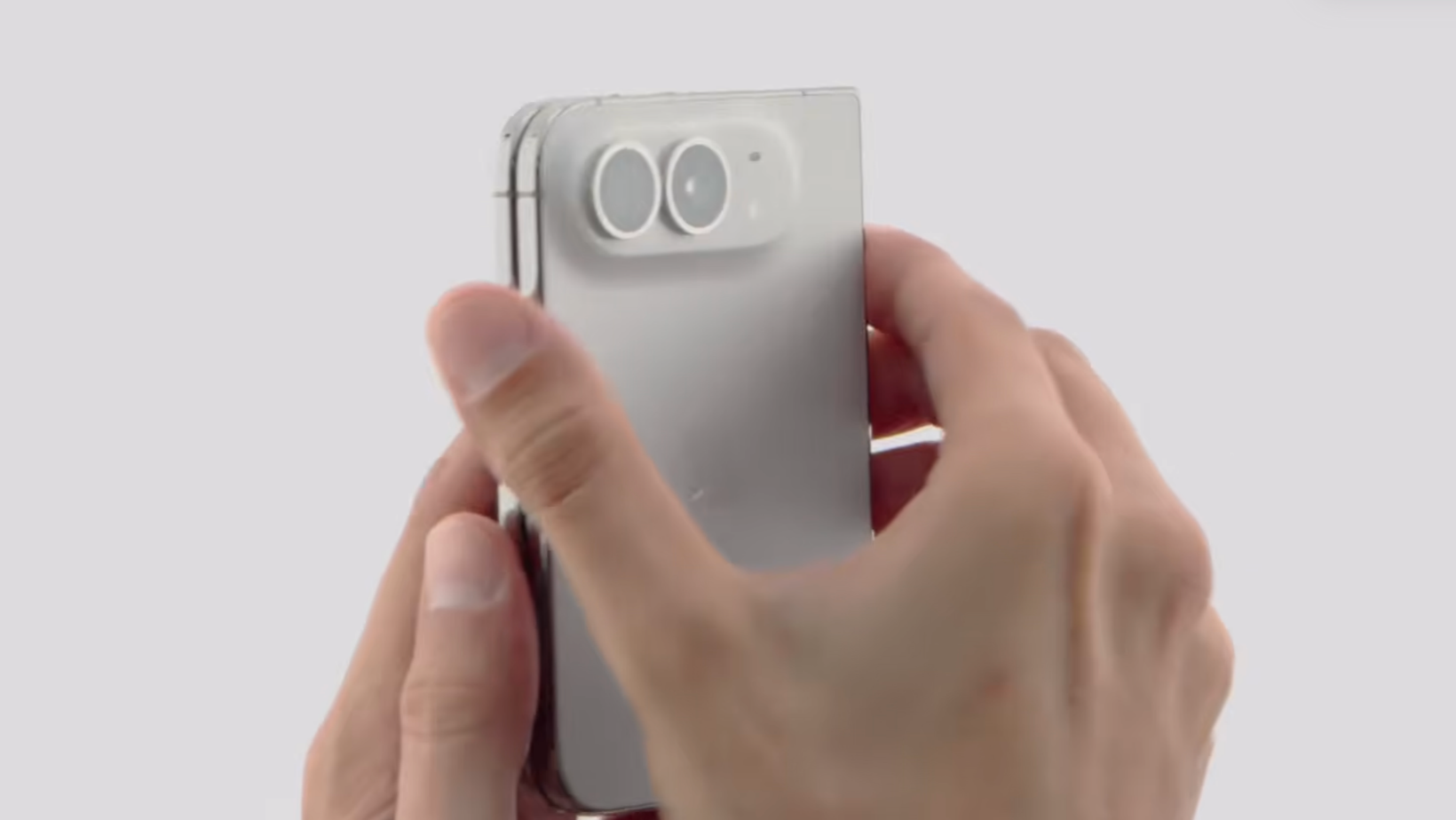
The first thing that struck me about the iPhone Duo is that Apple hasn't tried to reinvent what a foldable phone is supposed to be.
This is a book-style foldable.
How a book-style foldable works
Closed, you've got an outer display that works as your normal phone. Open it, and you've got a much larger internal screen for multitasking, video, reading, editing, and anything else that benefits from the extra space.
Samsung has been doing broadly the same thing for years.
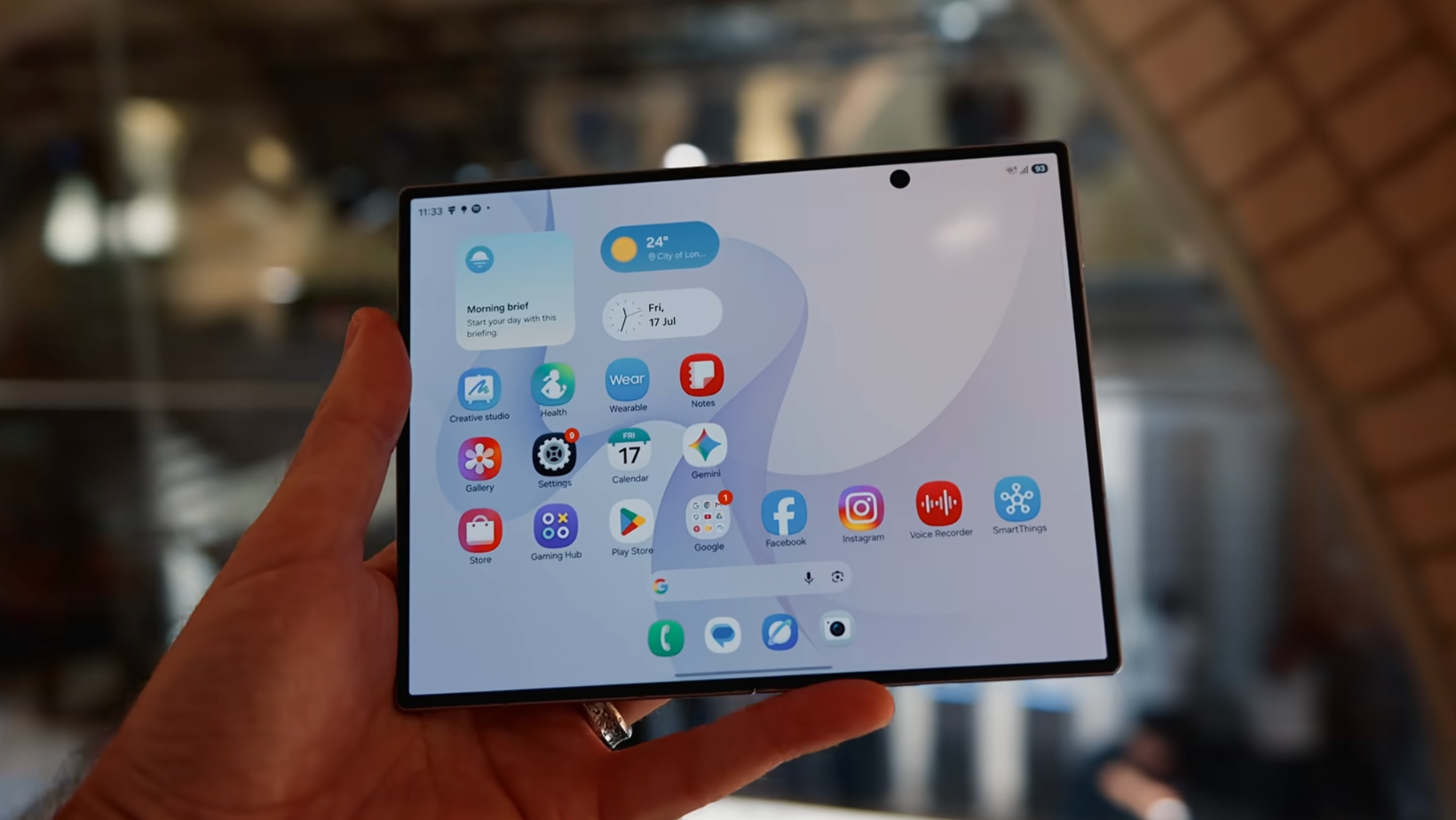
Twin 7.6-inch inner screens
Interestingly, the two companies have also landed on almost exactly the same internal display size.
The iPhone Duo has a 7.6-inch inner OLED display, while the Samsung Galaxy Z Fold 8 also uses a 7.6-inch internal display.
The outer displays are similarly close at 5.4 inches on the Duo and 5.5 inches on the Fold 8.
So we're not comparing two radically different interpretations of the foldable here.
The passport-size sweet spot
Both companies clearly think this sort of passport-style form factor is the sweet spot between something you can still carry around as a phone and something large enough to become genuinely useful when opened.
This iPhone Duo vs Galaxy Z Fold 8 comparison really comes down to how each one has packaged the idea.
Samsung wins the weigh-in
This is probably the first difference you'll notice when you pick both phones up. The iPhone Duo weighs 254g, while the Galaxy Z Fold 8 weighs 201g.
That's a 53g difference, and 53g is a lot in phone terms.
Why 53g is a big deal
For context, we're not talking about the sort of five-gram generational increase that requires a spreadsheet and unusually sensitive wrists to notice. The Duo is more than a quarter heavier than the Fold 8.
That's significant for a device you're going to hold one-handed, carry in a pocket, and potentially use for hours every day.
Samsung slims down too
Samsung has also managed to make the Fold 8 thinner. Folded, the Galaxy measures around 9.7mm thick, compared with 11.3mm for the iPhone Duo. Open them, and Samsung is around 4.5mm, while Apple is 5.2mm.
Apple describes the Duo as passport-like, and that's a useful way to think about the design. It's relatively short and wide when closed rather than trying to mimic the proportions of a conventional tall smartphone.
I quite like that idea.
But there's no escaping the fact that Samsung has managed to package its foldable into a substantially lighter and thinner device.
If I were choosing purely on what I wanted to carry around all day, that's a serious point in Samsung's favor.
Neck and neck on display specs
This is where things become more interesting. The iPhone Duo's internal OLED display measures 7.6 inches, with ProMotion up to 120Hz and peak outdoor brightness of up to 3,000 nits.
The outer 5.4-inch OLED also gets ProMotion up to 120Hz and the same 3,000-nit outdoor peak.
I like that Apple hasn't treated the outer screen as the rubbish screen you tolerate until you open the expensive one.
You should be able to use the Duo closed as a proper iPhone, which is important because nobody wants to unfold a phone every time they need to reply “yes” to a message.
Samsung matches the brightness
Samsung takes a similar approach.
The Galaxy Z Fold 8 has a 7.6-inch Dynamic AMOLED 2X inner display with an adaptive refresh rate from 1Hz to 120Hz, while the outer display is slightly larger at 5.5 inches.
Samsung also quotes up to 3,000 nits of peak brightness. In raw display specifications, then, there's surprisingly little separating them.
I'd want both in my hands before making any strong claims about which panel looks better.
Brightness figures don't tell you everything about color, reflections, or viewing angles. On a foldable, they also don't tell you about the crease.
And yes, we need to talk about the crease
Every foldable launch eventually arrives here. How visible is the crease?
Apple's anti-crease engineering
Apple has put a lot of engineering into the Duo's hinge and inner display construction. The company says the layered display and hinge design help minimize the appearance of the fold.
That sounds good.
But the iPhone Duo doesn't reach customers until October 23, so we still don't have the sort of long-term retail-unit testing I'd want before making confident claims about crease visibility or hinge durability.
Eight generations of hinge know-how
This is where Samsung's experience shows. The Galaxy Z Fold line has existed for years. Samsung has already been through the period where buying a foldable felt slightly like volunteering to participate in a public hardware beta test.
The Fold 8 is the result of all those previous generations. That doesn't automatically make Samsung's hinge better than Apple's. Apple has had the benefit of watching the category mature before entering it.
But I'd still give Samsung an advantage in proven experience.
If you're buying a $2,000 device and planning to keep it for four or five years, that history is worth considering.
Apple has a big durability advantage on paper
There's one specification where Apple immediately gets my attention. The iPhone Duo has an IP68 rating while the Galaxy Z Fold 8 is rated IP48.
Those numbers are easy to skim past, but the difference is important.
What those IP ratings mean
Both provide water resistance, but the Duo's rating also indicates a much higher level of protection against dust ingress.
Dust has historically been one of the awkward engineering problems for foldables because hinges and moving components create places for tiny particles to get where you really don't want them.
Apple entering the category with an IP68 rating is impressive.
The 20,000-fold question
That doesn't tell us everything about long-term durability. It doesn't tell us how the hinge will feel after 20,000 folds, whether the inner display develops marks, or how the phone responds to years of pocket lint.
But on the official ratings, Apple has an advantage. For a first-generation product, that's a good start.
iOS vs Android gets serious on a foldable
On a normal slab phone, the iOS-versus-Android debate can get a bit boring. Most people already know which one they prefer.
On a foldable, software becomes much more important because the entire point of the device is that the screen can transform. Apple has built fold-specific features into iOS 27.1 for the Duo.
You can use Split View, save app pairs, open two windows from the same app, and run Siri alongside other content. The interface also responds to different physical positions.
You get Split View, saved app pairs, two windows open from the same app, and Siri running alongside whatever else you're doing. The software also knows how you're holding the thing, closed, fully open, propped halfway on a table, and Apple's built a different layout for each rather than just stretching a regular iPhone screen across more glass.
That's important because a 7.6-inch display isn't particularly exciting if the software doesn't know what to do with it.
Samsung, however, has had years to solve exactly this problem.
Samsung's multitasking head start
The Galaxy Z Fold 8 can juggle multiple apps and floating windows at once, and Samsung has had years to sand down the rough edges of that system. This is probably the biggest software question around the Duo.
Apple's implementation looks characteristically clean. Samsung's is more mature and, at least on paper, gives power users more flexibility.
Which approach is better depends on what you want.
If you're the sort of person who wants several apps open at once and intends to treat the phone almost like a tiny tablet, Samsung's experience is very appealing.
If you prefer Apple's more controlled approach and already use iOS everywhere else, the Duo finally gives you those larger-screen possibilities without requiring a move to Android.
Apple's ecosystem is the Duo's ace in the hole
This is the part that's difficult to put into a specifications table. There are millions of people who may have liked Samsung's foldables for years but were never realistically going to buy one.
Not because the hardware wasn't good enough, but because they own an Apple Watch… and AirPods… and a MacBook.
Their photos are in iCloud, their family uses iMessage and FaceTime, and their passwords sync across Apple devices. They've spent ten years buying apps and letting Apple make leaving progressively more annoying.
For those people, the iPhone Duo isn't simply another foldable competing with Samsung. It's the first foldable they were likely to buy. That's a huge advantage.
Galaxy fans have a strong ecosystem too
Samsung has a very strong ecosystem of its own, particularly if you use Galaxy Watch, Galaxy Buds, Samsung tablets, and Windows PCs.
But switching between the iPhone and Samsung may involve considerably more than deciding which hinge you prefer.
If you're already deeply invested in either ecosystem, I'd factor that into the decision before obsessing over a few millimeters of thickness.
A20 Pro vs Snapdragon 8 Elite Gen 5
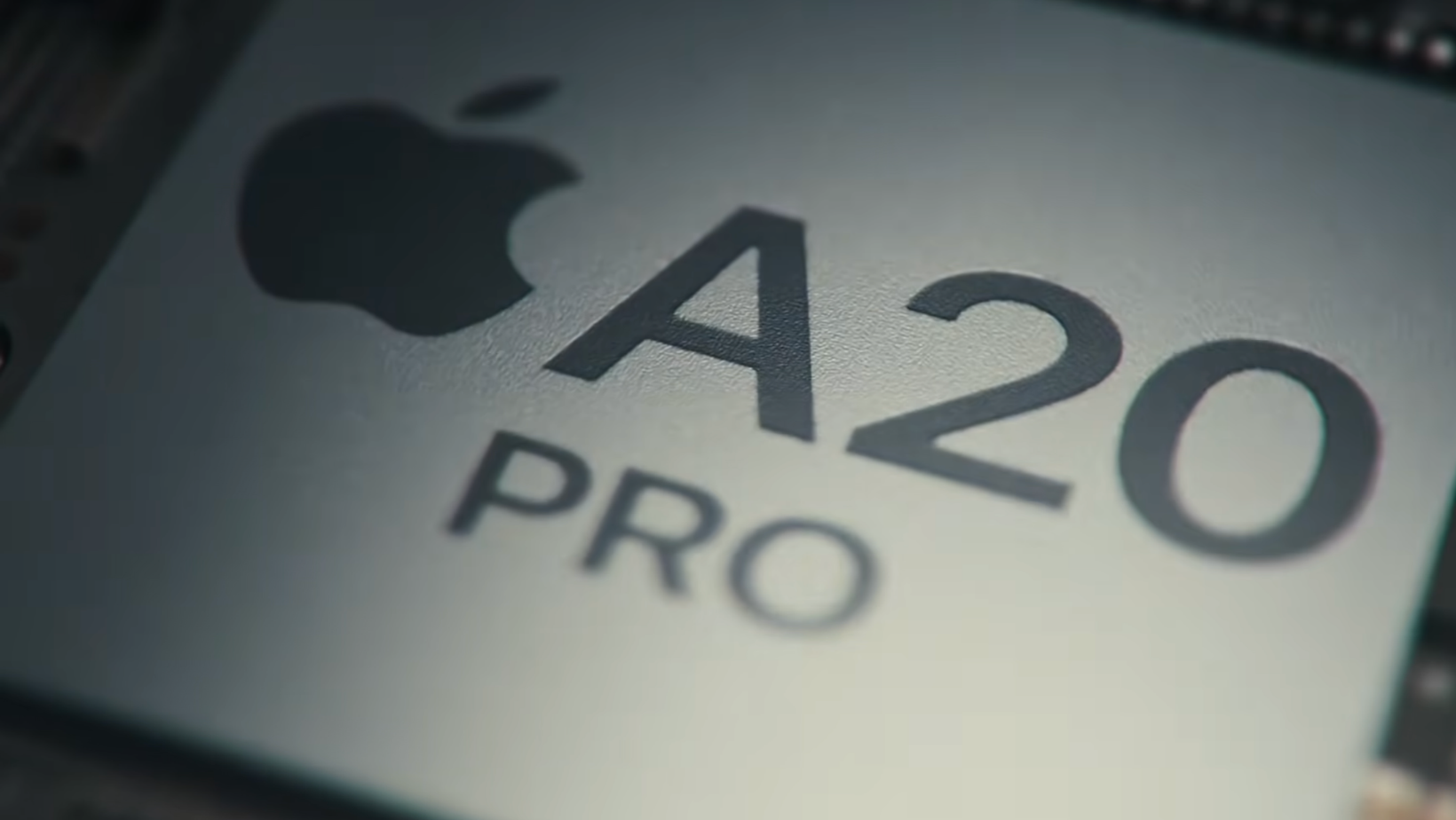
Inside the Duo is Apple's A20 Pro, the same chip family powering the iPhone 18 Pro, and on paper it's a beast: 2nm process, six-core CPU, seven-core GPU, dual 16-core Neural Engines. The Galaxy Z Fold 8 counters with Qualcomm's Snapdragon 8 Elite Gen 5 for Galaxy. Neither one is going to leave you wanting more power.
The Galaxy Z Fold 8 uses the Snapdragon 8 Elite Gen 5 for Galaxy. Both are flagship chips, and should be enormously powerful.
I don't think picking one because somebody shows you a benchmark graph with a slightly taller bar is going to be the deciding factor.
What the software does with all that power
The better question is what the software does with that performance.
The Duo uses A20 Pro to drive its two-display interface, multitasking, camera processing, and Apple Intelligence features.
Samsung combines Qualcomm's flagship hardware with its own Galaxy AI tools and the much more established multitasking capabilities of One UI on a folding display.
Cooling gets tricky in a foldable
Real-world thermal performance is another area I'd want to test properly. Foldables present unusual cooling challenges because components have to be spread across two halves of a very thin device.
Apple has designed the Duo around that from the start, but until retail units have been put through sustained gaming, camera, and productivity workloads, there are limits to what we can conclude from the specifications.
For most buyers, I'd call performance a draw for now. Both phones have far more processing power than the average person is likely to need.
Camera specs with a plot twist
You might assume that spending $1,999 on Apple's most unusual iPhone would also get you Apple's best camera system.
It doesn't.
The iPhone Duo has a 48MP Dual Fusion camera system consisting of a 48MP Main camera and a 48MP Ultra Wide. The Main camera can also provide a 2× optical-quality crop, so you effectively get 0.5×, 1× and 2× shooting options.
What you don't get is the dedicated Telephoto system found on the iPhone 18 Pro, which is an important compromise.
Megapixels won't pick a winner
The Galaxy Z Fold 8 uses a 50MP Wide and 50MP Ultra Wide camera, and the broader experience differs from Apple's in the usual ways around image processing, shooting modes, and software.
I wouldn't declare a winner based on megapixels.
Fifty is not automatically better than 48, and smartphone photography stopped being that simple a very long time ago.
The real question is whether you're comfortable paying flagship-plus money for a foldable where camera hardware has clearly had to make room for the folding design.
That's particularly relevant on the Apple side because the iPhone 18 Pro is cheaper and has the more versatile Pro camera system.
I've gone into that separately in my iPhone Duo camera deep dive.
Photo tricks that make the fold worth it
The hardware may not match the iPhone 18 Pro's camera versatility, but Apple is using the folding design in some clever ways.
Duo Preview can show the person you're photographing a preview on the outer display while you're framing the shot on the main screen.
There's also Smart Take, which can recognize when people are ready for the photo.
My favorite may be Kid Cue, which puts animations on the outer display to encourage children to look at the camera.
Anyone who has tried to take a family photo involving a toddler will immediately understand why somebody at Apple was apparently determined to build this.
Dual Capture and Duo FaceTime
Dual Capture can record two views, and Duo FaceTime can make use of the second display when other people are around.
These aren't reasons I'd buy a $1,999 phone by themselves.
They do show that Apple has thought about what becomes possible when you've got two screens facing in opposite directions.
That's exactly what I want from foldable software.
Touch ID makes a comeback
Here's something I wasn't necessarily expecting from Apple's first foldable.
Touch ID is back.
The iPhone Duo has Touch ID built into its side button rather than using Face ID. Apple doesn't list Face ID for the device.
Samsung also uses a side-mounted fingerprint reader on its foldable, so the two devices take a fairly similar approach to biometric authentication.
There are practical reasons why fingerprint authentication makes sense on a foldable, where camera and sensor placement becomes much more complicated.
Still, after years of Face ID on flagship iPhones, its absence is going to feel strange to some Apple users.
I've got a separate guide looking at the iPhone Duo Touch ID and why Apple's foldable doesn't have Face ID, because there's more going on here than you might expect.
Samsung saves you cash, especially outside the US
The iPhone Duo starts at $1,999 in the US for 256GB.
The Galaxy Z Fold 8 starts at $1,899.
A $100 difference at this end of the market isn't enormous. If you've already decided to spend nearly two grand on a phone, I doubt an extra $100 will completely change the decision.
Outside the US, however, the gap can be much bigger.
In the UK, for example, the iPhone Duo starts at £1,999, while the Galaxy Z Fold 8 launched at £1,699.
That's £300.
Now we're talking about enough money to buy something else genuinely useful rather than a slightly nicer case.
Apple's pricing also gets fairly spectacular as you move through the storage options.
The Duo comes in:
- 256GB: $1,999
- 512GB: $2,199
- 1TB: $2,599
- 2TB: $3,199
Yes, there is now a $3,199 iPhone.
On the plus side, Apple offers up to 2TB, whereas Samsung's standard Fold 8 tops out lower. Granted, depending on what you use your iPhone for, most people probably won’t need that much storage.
Battery life remains a wildcard
Apple rates the iPhone Duo for up to 24 hours of typical use. It also quotes up to 44 hours of video playback when using the outer display.
The Duo has a dual-battery design, which makes sense given that its internal components are split across two halves.
But battery comparisons between foldables are messy. It really comes down to how often you use the outer screen versus the 7.6-inch display. And what you do with it. Do you multitask, watch videos, use 5G, or take tons of photos?
Two people could own exactly the same foldable and have very different battery experiences depending on how they use it.
Apple's figures are also Apple's figures.
The Duo isn't in customers' hands yet, so we don't have the independent real-world battery testing I'd want before comparing it confidently with Samsung.
For now, I wouldn't choose either phone based purely on claimed battery life. I'd wait for proper side-by-side testing.
Charging splits these two
The iPhone Duo supports wired charging to around 50% in approximately 20 minutes with a suitable 60W-or-higher adapter. It also supports MagSafe and Qi2 wireless charging at up to 25W.
MagSafe is one of those features that's easy to overlook until you've accumulated several years' worth of chargers, stands, battery packs, wallets and car mounts. For existing iPhone users, keeping that accessory ecosystem on a foldable is useful.
Samsung has its own wireless charging options, of course, but anyone moving from an existing iPhone to the Duo can bring much of their existing MagSafe setup with them.
Again, ecosystem. It keeps sneaking into this comparison.
The multitasking champ
If multitasking is your top priority in this iPhone Duo vs Galaxy Z Fold 8 debate, I'd lean toward Samsung right now.
That's not because Apple's approach looks bad. It's because Samsung has been developing foldable multitasking for years.
A pocket-size tablet
The Fold 8 can make much more aggressive use of the large internal display, including several apps and floating windows. It behaves more like a miniature productivity tablet when you want it to.
Apple keeps it simple
Apple's Duo feels more restrained. Split View, app pairs and multiple windows from the same app are genuinely useful, but Apple is still applying its usual philosophy of controlling how much complexity reaches the user.
Some people will prefer that.
Pick based on how you work
Personally, if I were buying a foldable specifically because I wanted to squeeze as much productivity as possible out of the inner display, Samsung's maturity would be difficult to ignore.
If I wanted an iPhone that occasionally transformed into a bigger, more flexible workspace, Apple's approach might make more sense. Those sound similar, but they're very different buying motivations.
Which one is better for everyday phone use?
This might be the more relevant question. A foldable is still going to spend a large amount of its life closed.
You're going to pull it out to answer a message, check Google Maps, change a song, approve a payment, or quickly take a photograph. You don't want to unfold your phone every 90 seconds.
Both Apple and Samsung appear to understand this. Samsung has a slightly larger 5.5-inch outer display and a much lighter overall device.
Apple's 5.4-inch outer display is smaller, but it gets the full 120Hz ProMotion treatment and has been designed to work as a complete iPhone interface rather than a secondary notification panel.
I'd need more time with the Duo before deciding which feels more natural as an everyday closed phone.
On weight alone, Samsung has a pretty enormous advantage.
Who should grab the iPhone Duo?
I think the iPhone Duo makes the most sense for someone who has wanted a foldable for years but didn't want to leave Apple to get one.
If you've got a Mac, Apple Watch, AirPods, iCloud Photos, iMessage, and everything else tied together, the Duo removes the biggest barrier that previously existed between you and a folding phone.
You also get some impressive hardware for a phone still in its debut year.
The IP68 rating stands out. Both displays get 120Hz support. A20 Pro should provide plenty of performance. MagSafe remains intact, and Apple has clearly spent time thinking about how iOS should behave when a phone suddenly doubles in size.
I'd also choose the Duo if Apple's approach to software generally suits you better. There is value in familiarity.
A $1,999 foldable probably isn't the ideal device to find out you don't like Android.
The Fold 8 is made for power users
Samsung makes a very strong case if you're already an Android user or don't particularly care which ecosystem you're in.
The Fold 8 is lighter, thinner, and cheaper. Those aren't small advantages.
Samsung also has years of experience building foldable software, and that shows most clearly in multitasking. If your reason for buying a foldable is productivity, the Fold's ability to make aggressive use of that internal display is very compelling.
There's also something reassuring about buying the eighth generation of a product rather than the first.
Apple may have nailed its first foldable. It may also run into several things over the next year that end up being fixed in iPhone Duo 2.
That's how it goes with anything this new.
So, which foldable earns your money?
Ignore ecosystems entirely, and this iPhone Duo vs Galaxy Z Fold 8 comparison tilts toward Samsung as the more rational pick right now.
The Galaxy Z Fold 8 is 53g lighter. It's thinner, cheaper, and its foldable software is more mature. After all, Samsung has years of experience working through the strange engineering problems that come with putting a hinge through the middle of a smartphone.
That's a very strong package. But I don't think most people will ignore ecosystems. And that's why the iPhone Duo is a real contender.
Apple doesn't need to convince every Galaxy Fold owner to switch. It only needs to convince iPhone owners who have looked at foldables for years and thought, “That looks interesting, but I'm not moving everything to Android.”
For the first time, those people have an option. My biggest concerns would be the weight, the price, and the fact that nobody's had one long enough to know how it holds up.
At 254g, it's heavy, and at $1,999, it's expensive. Until people have used retail units for months rather than days, we simply don't know as much about the long-term hinge, crease, and inner-display durability as we do with Samsung's latest generation.
So if you want the most mature foldable experience today, the Galaxy Z Fold 8 is extremely difficult to argue against.
If you've been waiting specifically for a folding iPhone, though, the Duo looks much more convincing than I'd expect from a first attempt.
I'd resist ordering the 2TB model unless you have a very good explanation ready for your bank.
For more foldable comparisons and hands-on buying decisions like this one, you can join my Experiments in Progress newsletter.
FAQs
Is the iPhone Duo better than the Samsung Galaxy Z Fold 8?
They have different strengths. The Galaxy Z Fold 8 is lighter, thinner, cheaper, and benefits from several generations of Samsung foldable development. The iPhone Duo offers iOS, Apple's ecosystem, IP68 protection, MagSafe, and Apple's new fold-specific software. The better choice will depend heavily on which ecosystem and type of foldable experience you prefer.
Is the iPhone Duo more expensive than the Galaxy Z Fold 8?
Yes. The iPhone Duo starts at $1,999 in the US, while the Galaxy Z Fold 8 starts at $1,899. The price difference is larger in some other markets, including the UK.
Which is lighter, iPhone Duo or Galaxy Z Fold 8?
The Galaxy Z Fold 8 is considerably lighter. It weighs around 201g, compared with 254g for the iPhone Duo, a difference of 53g.
Which is thinner, iPhone Duo or Galaxy Z Fold 8?
The Galaxy Z Fold 8 is thinner both folded and unfolded. It measures around 9.7mm when folded and 4.5mm when open, compared with 11.3mm and 5.2mm respectively for the iPhone Duo.
Does the iPhone Duo have a bigger screen than the Galaxy Z Fold 8?
Both phones have 7.6-inch internal displays. The Galaxy Z Fold 8 has a slightly larger outer display at 5.5 inches compared with the iPhone Duo's 5.4-inch outer screen.
Does the iPhone Duo have Face ID?
Apple does not list Face ID for the iPhone Duo. Instead, the phone uses Touch ID integrated into the side button.
Is the iPhone Duo waterproof?
Apple gives the iPhone Duo an IP68 water- and dust-resistance rating under IEC 60529. Water resistance can diminish over time and does not make the device completely waterproof.
When does the iPhone Duo come out?
iPhone Duo preorders open on October 16, 2026, with retail availability beginning October 23.
Is it worth switching from Samsung to the iPhone Duo?
That depends on more than the foldable hardware. Moving from Samsung to the Duo also means moving from Android to iOS and potentially changing watches, cloud services, apps, and other parts of your ecosystem. If you're already happy with Samsung and prioritize mature foldable multitasking, the Fold 8 remains a strong option. The Duo makes more sense for people who specifically want a foldable within Apple's ecosystem.
