


For years, we were told that building your own PC was the only sensible option if you wanted the best performance for the money. And to be fair, that’s still mostly true. However, the rise of ultra-premium prebuilts has made things a bit more complicated.
I’ve spent years reviewing tech (and I’ve even built my own gaming PC), so I know exactly what goes into these machines and what they cost to put together.
So in this guide, I thought it would be fun to break down the most expensive gaming PCs you can buy right now. We’ll look at what you actually get for your money, and more importantly, whether these ultra-premium builds are genuinely worth it.
The Reality of Premium Prebuilt PCs

Before we look at the specific machines, we need to talk about how pricing works in the boutique PC market.
If you buy the individual components for a top-tier gaming PC (an RTX 5090, an AMD Ryzen 9 9950X3D, 64GB of premium DDR5 RAM, a high-end motherboard, and a 1000W power supply), you will spend roughly $4,000 to $4,500, or even more. Prices on RAM are at an all-time high right now due to AI data centers buying up the supply
When you buy a prebuilt system with those exact same specs from a premium builder, you will often pay $6,000 or more.
You are paying a massive premium, but it’s important to understand what that extra money actually buys you.
To start, you are paying for the labor of professional assembly (which, if you’ve ever built a PC, you’ll know isn’t always a quick job). You’re also paying for extensive stress testing to make sure the system is stable before it ships.
And most importantly, you’re paying for a comprehensive warranty and technical support. If a component fails in a PC you built yourself, you have to diagnose the problem, remove the part, and deal with the manufacturer's RMA process. If a premium prebuilt PC fails, you make one phone call, and the builder handles everything.
For many people, that peace of mind is worth the markup.
Alienware Aurora R16 from Dell
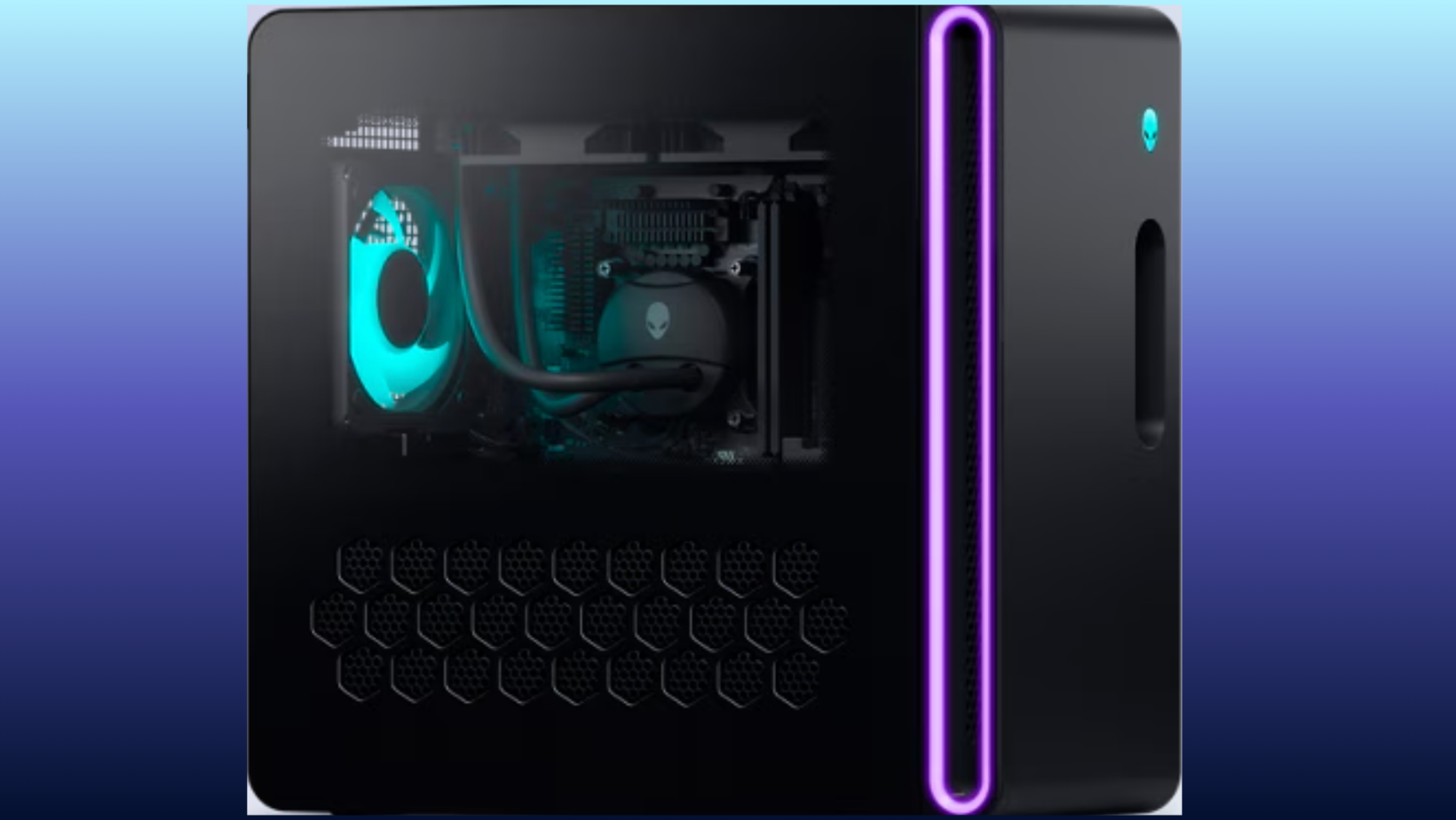
If you’re looking at ultra-premium prebuilts and wondering what a more grounded alternative looks like, this is where something like the Alienware Aurora R16 comes in.
This isn’t trying to be a visual showpiece or a custom loop masterpiece. It’s built around a different idea. Strong performance, clean design, and something you can order today without going through a boutique builder.
You can configure it with high-end Intel processors and top-tier NVIDIA graphics, alongside DDR5 memory and fast NVMe storage. In real terms, that puts it right up there for gaming performance with far more expensive systems.
The difference comes down to how it’s put together.
This is a standardized, engineered system rather than a hand-built one-off. You’re not getting custom tubing or experimental chassis designs. What you do get is a compact case, solid airflow, and a setup that works straight out of the box without any extra effort.
Thermals are well managed, noise is controlled, and the whole experience is straightforward from the moment it arrives.
There are some trade-offs. Alienware still leans on proprietary parts, which can make future upgrades more restrictive compared to fully standard builds.
If your focus is performance and convenience over aesthetics, this makes far more sense than spending thousands extra on a custom chassis.
MEG Trident X2 from MSI
This is a completely different take on high-end gaming PCs, and one that lines up much more closely with how most people actually use their setup.
The MEG Trident X2 focuses on delivering top-tier hardware in a much more compact and practical form.
You’ll typically find configurations with high-end Intel CPUs paired with RTX 4080 or 4090-class GPUs, backed up by DDR5 memory and fast SSD storage. That combination delivers the kind of performance you’d expect at this level, especially in modern titles.
The key difference is the form factor.
This system is noticeably smaller than the massive towers you see from boutique builders, which makes it far easier to fit into a normal desk setup or even a living room environment.
Cooling is handled through a mix of air and liquid solutions depending on the configuration. It’s tuned for stability and consistency rather than aggressive overclocking.
Setup is simple. You plug it in and start playing. No tuning, no troubleshooting, no extra steps.
It doesn’t have the handcrafted feel or visual flair of something built from scratch, but in terms of real-world gaming performance, you’re not giving anything up.
Alienware Area-51: The Iconic Behemoth
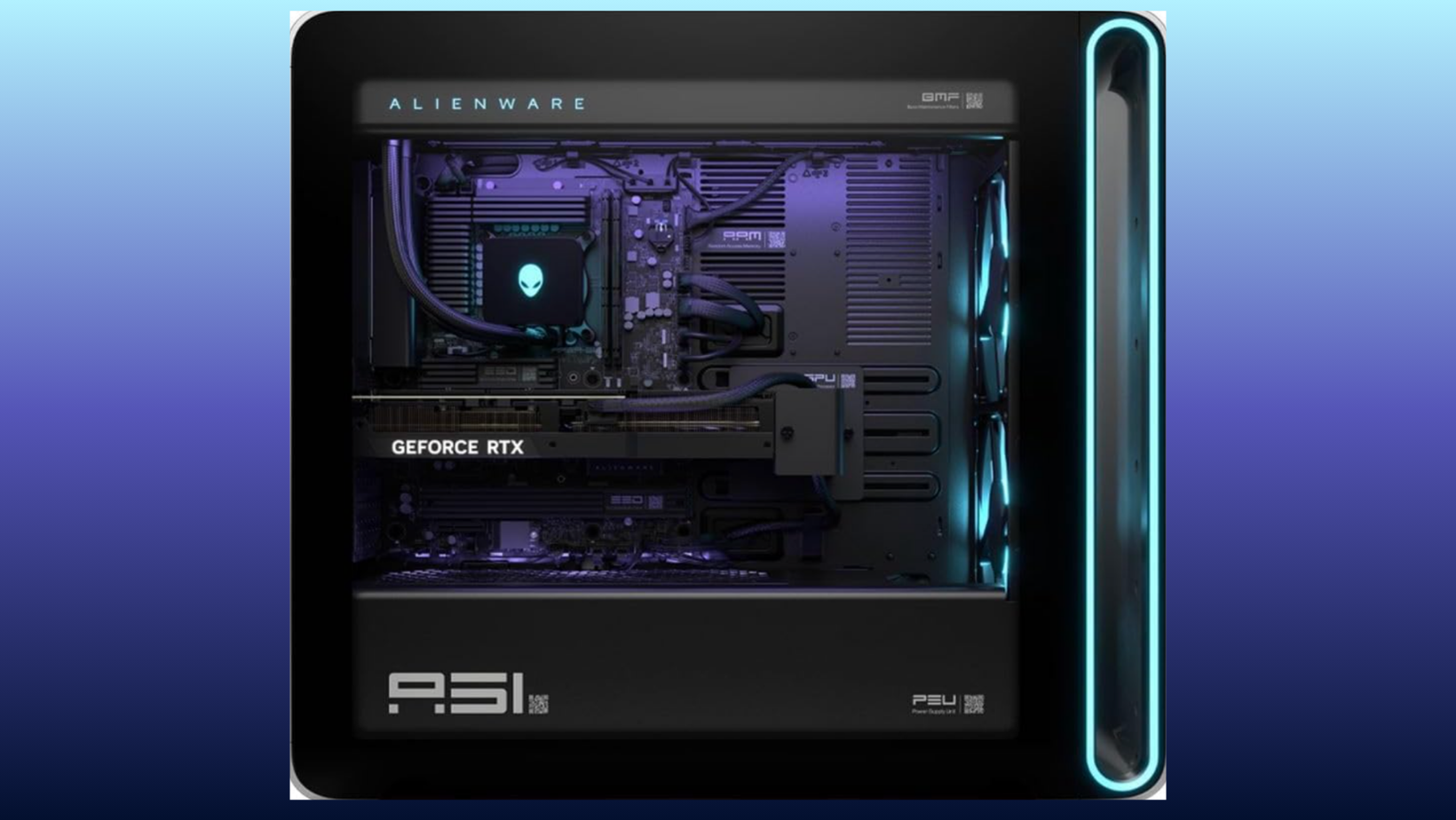
Alienware recently resurrected their legendary Area-51 desktop line, and it remains one of the most recognizable gaming PCs on the market.
A fully loaded Area-51 will cost you around $5,500. For that price, you get an Intel Core Ultra 9 285K (or the newly added AMD Ryzen 7 9850X3D, added at CES 2026), an RTX 5090 with 32GB of GDDR7, 64GB of DDR5 RAM, and a massive 4TB NVMe SSD.
The appeal of the Area-51 has always been its design. The new chassis is sleek, futuristic, and features Alienware's signature customizable RGB lighting zones. It’s a massive, heavy system that dominates any desk it sits on.
However, it’s important to note that Alienware systems still use several proprietary components, including custom motherboards and power supplies. This makes upgrading the system yourself much more difficult down the line compared to builders who use standard off-the-shelf parts.
Corsair Vengeance i7500: The Sensible Premium Option
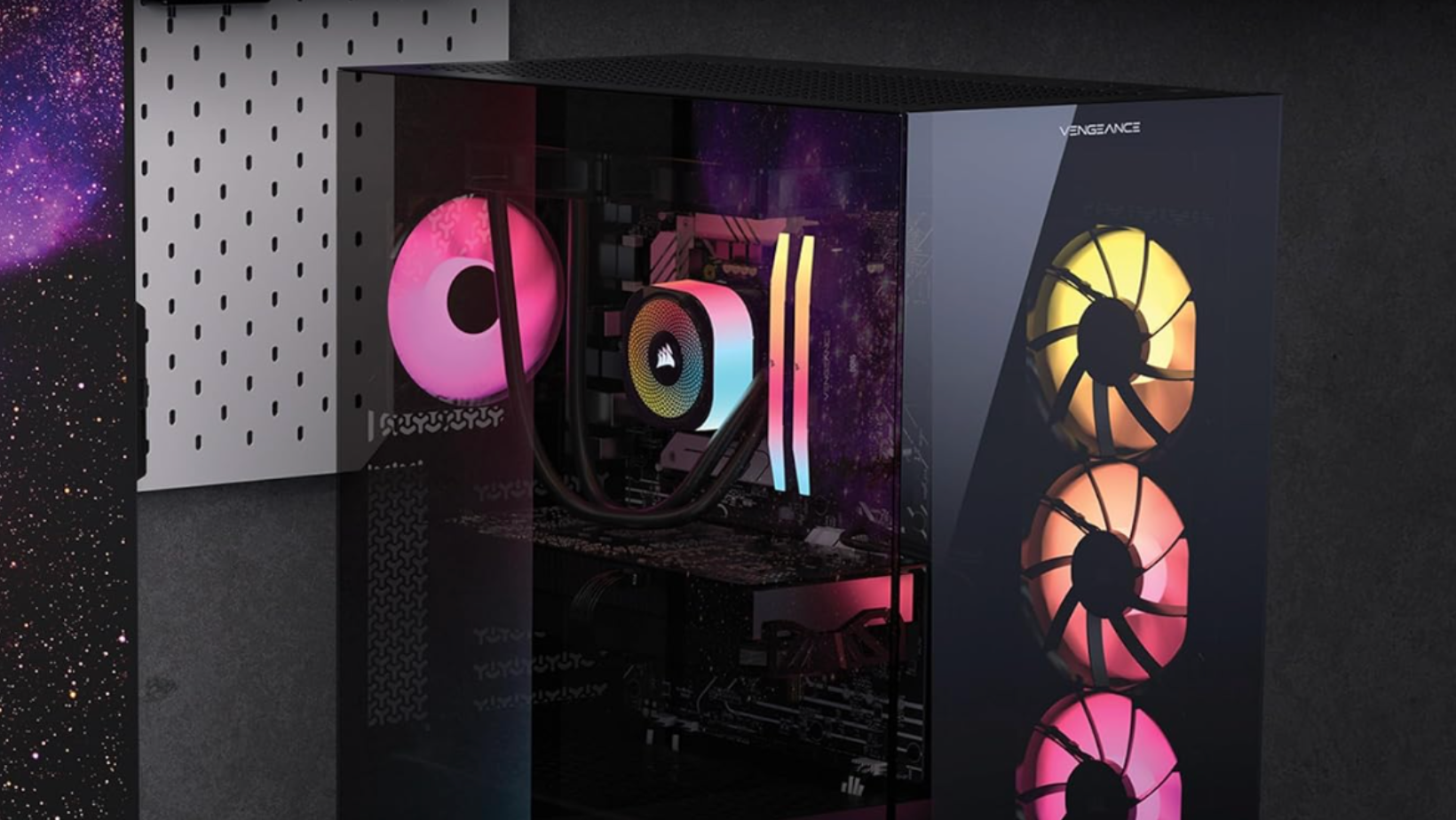
If you want top-tier performance without paying the massive "boutique" markup, the Corsair Vengeance i7500 is the most logical choice.
Priced at $6,399.99 (though frequently on sale for less), this system features an Intel Core i9-14900KF, an RTX 5090, 64GB of Corsair Vengeance DDR5 RAM, and a 2TB M.2 SSD. It is cooled by a Corsair Nautilus 240mm liquid cooler and powered by a Corsair 1000W 80+ Gold fully modular PSU.
Unlike Origin or Maingear, Corsair is primarily a component manufacturer. Because they make the case, the RAM, the power supply, the fans, and the liquid cooler themselves, they can offer a highly cohesive system at a slightly lower price point.
The Vengeance i7500 uses entirely standard, off-the-shelf components. If you want to upgrade the motherboard or swap the power supply in three years, you can do so easily. It lacks the bespoke, hand-crafted feel of a custom hardline water-cooled system, but it delivers the exact same frame rates in games.
Don’t Forget the Monitor (Seriously)
Here’s something I see all the time, and it genuinely hurts a little.
Someone spends $6,000-$8,000 on a top-tier gaming PC… and then pairs it with a mid-range monitor they bought two years ago.
Which kind of defeats the point.
Because if you’re running something like an RTX 5090 on a basic 1440p display, you’re not actually seeing what that system can do. It’s like buying a supercar and only ever driving it in city traffic; technically impressive, but you’re never really using it.
If you’re going all-in on a high-end PC, the monitor matters just as much. That means high refresh rate 4K, ultrawide setups, and OLED panels that actually show the detail, contrast, and smoothness you’re paying for.
Otherwise, a big chunk of that performance is just… wasted.
I actually went down this rabbit hole in a recent video. If you’re even considering one of these ultra-premium PCs, it’s well worth a watch so you can know what to budget for!
My Final Verdict on the Most Expensive Gaming PCs
This brings us to the most important question: should you actually buy one of these premium machines?

If your only goal is to get the highest possible frame rates in games, the answer is no. You can build a PC yourself with an RTX 5090 and a top-tier processor for thousands of dollars less than these premium prebuilts. The performance difference between a $4,500 self-built PC and an $8,000 custom water-cooled PC is negligible. They use the same silicon.
However, value is subjective.
Here are the key scenarios where ultra-premium gaming PCs justify their price:
- Convenience: If you have a high disposable income and zero interest in spending a weekend building a computer, troubleshooting POST codes, and managing cables, these systems make sense. You are buying back your time.
- Aesthetic: If you want a computer that serves as a visual centerpiece for your room (something with custom bent acrylic tubing and a flawless aesthetic), you have to pay a premium builder to create it. That level of craftsmanship requires specialized skills and tools that most people do not possess.
- Support: Finally, there is the warranty. For professionals who use their PC for both work and gaming, having a single point of contact for technical support and a guarantee of rapid repairs is incredibly valuable.
If these things matter to you, and the price tag does not make you wince, an ultra-premium build might just be exactly what you need.
